

Table of Contents
- Understanding Moisture Sources and Boat Floor Soft Spots
- Conducting a Boat Floor Moisture Inspection
- Sealing and Protecting Marine Plywood Subfloor
- Frequently Asked Questions
Last Updated: October 11, 2026
Understanding Moisture Sources and Boat Floor Soft Spots
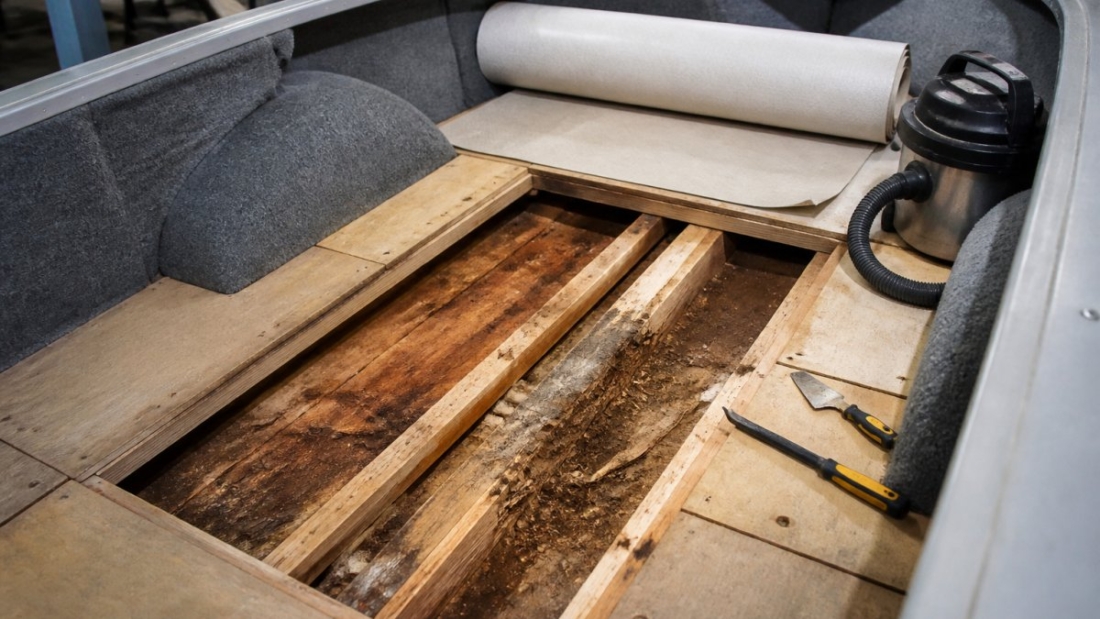
Preventing subfloor rot in marine craft requires understanding moisture sources: condensation, direct leaks, and bilge water seepage. Salt air, humidity, and temperature swings create ideal conditions for rot.
Soft spots signal rot: press the deck with your thumb, and if it feels spongy, wood rot has started and spreads quickly.
Most catch rot too late, damage runs deeper than visible, making preventing subfloor rot critical.
Conducting a Boat Floor Moisture Inspection
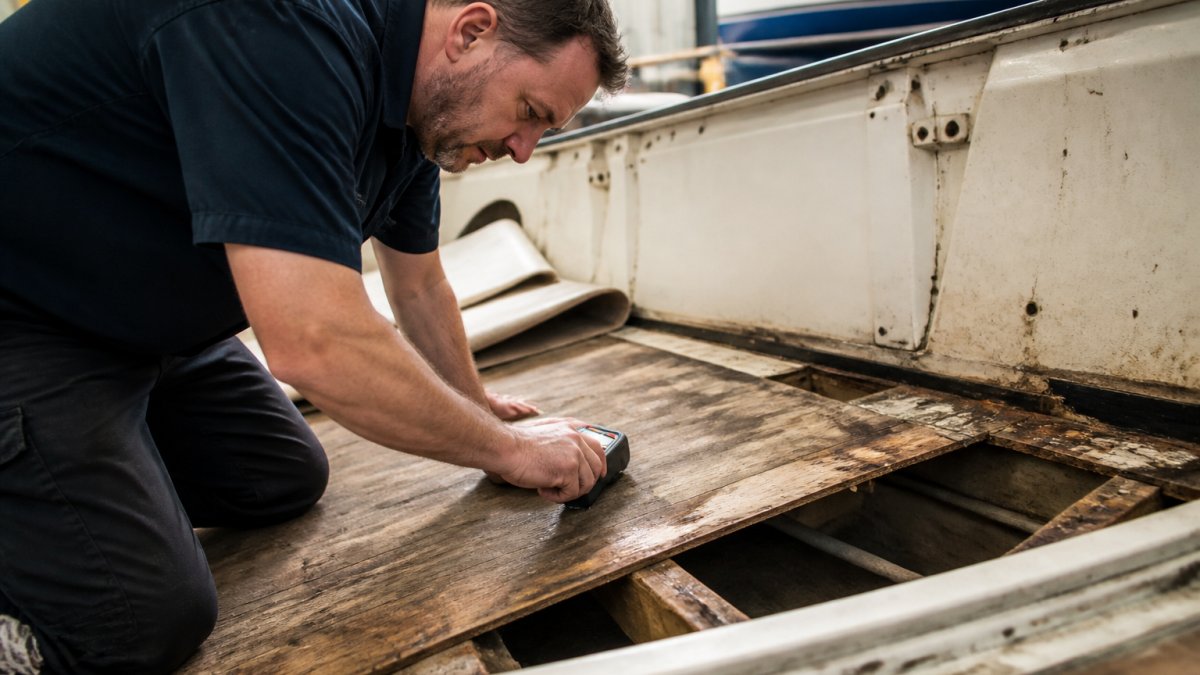
A moisture meter inspection takes 30 minutes and measures water content in wood; readings above 20% signal danger (normal is 12-16%).
Check obvious leak sources: cabin windows, portholes, deck seams, galley sinks, and head areas where plumbing runs.
Inspect bilge spaces and ensure your bilge pump works completely; even small amounts of standing water accelerate rot.
Test multiple spots with your moisture meter on exposed wood edges and panel undersides; trending matters more than single readings.
Sealing and Protecting Marine Plywood Subfloor
Once you’ve confirmed dry conditions, seal the subfloor. Marine plywood works better than interior-grade plywood for boat floors because it resists delamination. But plywood alone isn’t waterproof. The edges and exposed surfaces must be sealed. Applying a high-quality epoxy resin creates a durable barrier that prevents moisture intrusion, a necessary step for protecting marine electronics from the corrosive effects of salt air.
Start with wood edges. Cut edges absorb water fastest. Sand lightly, then apply marine epoxy or spar urethane to all exposed edges. Two coats work better than one. Let each coat cure fully before adding the next.
For the subfloor surface, apply a protective coating. Marine epoxy creates a waterproof barrier. Spar urethane offers flexibility and UV resistance. Both work. Choose based on your climate and foot traffic. High-traffic areas need tougher coatings.
Seal seams between panels with marine adhesive and sealant. Gaps invite water. Use stainless steel fasteners, not galvanized ones. Salt water corrodes regular steel. Stainless costs more but lasts.
Ventilation prevents condensation buildup. Ensure air flows under the cabin sole. Blocked vents trap humidity and trigger rot from below. Clean vents monthly.
Moisture is your subfloor’s worst enemy. At North River Limited, we understand that marine craft demand flooring solutions engineered for wet environments. Our woven vinyl collections, including SupremeVinyl, are designed to meet the rigorous demands of marine environments. Contact us to learn how our marine flooring solutions can provide durable, professional-grade alternatives.
Frequently Asked Questions
What causes subfloor rot in boats?
Subfloor rot develops when moisture reaches wood without adequate ventilation or drainage. Common sources include bilge water seepage, condensation from temperature changes, leaks at seams and fasteners, and poor airflow beneath the cabin sole. Standing water in the bilge accelerates decay. Regular inspection and proper sealing prevent wood from absorbing moisture that feeds rot and delamination.
How do you tell if a boat subfloor is rotting?
Soft spots or spongy areas indicate rot, press the floor with firm pressure and listen for a hollow sound. Check for discoloration, mold, or musty odors. Use a moisture meter to measure wood permeability; readings above 20% indicate excessive moisture. Inspect seams, fastener holes, and edges where water typically intrudes. Early detection prevents structural damage and costly replacement.
Should a boat subfloor be sealed before installing flooring?
Yes. Seal all exposed wood edges, fastener holes, and seams with marine epoxy or spar urethane before laying vinyl flooring. This encapsulates the substrate and blocks moisture infiltration. Proper sealing reduces water intrusion risk and extends subfloor life. Pair sealed wood with high-quality woven vinyl flooring for enhanced protection against bilge moisture and condensation.