
Table of Contents
- Woven Vinyl Boat Flooring for Commercial Vessels
- Non-Slip Boat Flooring and Traction on Wet Decks
- Marine Flooring for High-Traffic Areas and Durability
- Frequently Asked Questions
Last Updated: October 20, 2026
Woven Vinyl Boat Flooring for Commercial Vessels
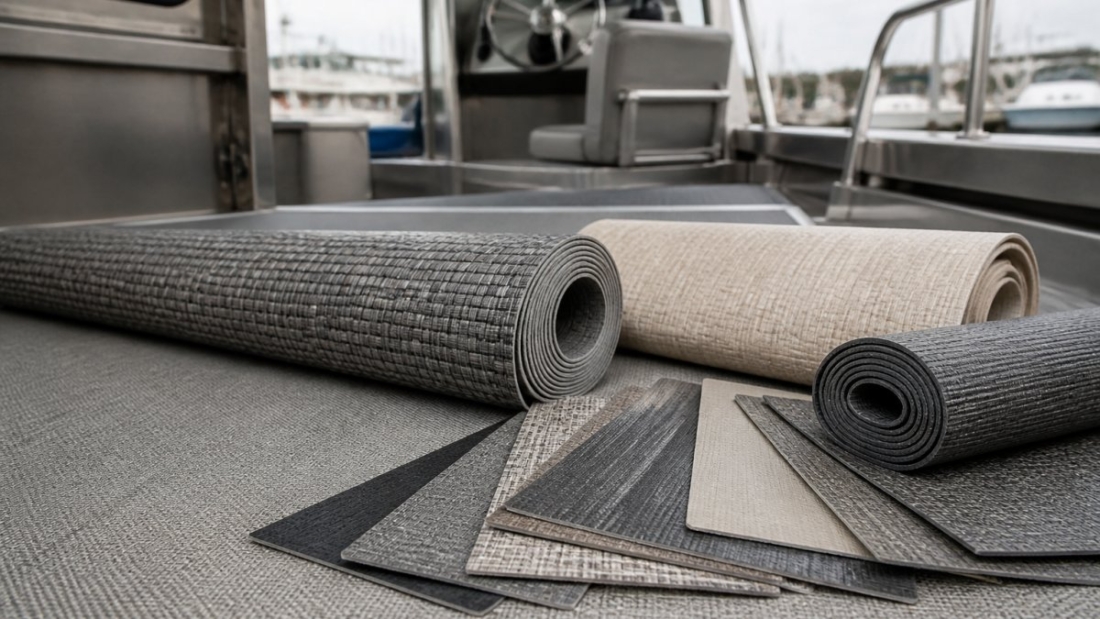
Woven vinyl flooring dominates commercial marine applications because it delivers the durability, safety, and cost efficiency boat manufacturers demand. North River Limited has engineered it for commercial vessels for 15 years.
The best marine flooring for commercial boats must handle constant foot traffic, saltwater, cleaning chemicals, and UV without degrading. Woven construction resists punctures, maintains wet traction, and absorbs impact better than rigid flooring, meaning fewer replacements and lower lifecycle costs.
Our Seagrass and SupremeVinyl collections are water-resistant at the core, UV-stable, and install quickly without complex adhesives. The woven structure lets crews hose down decks without water seeping through seams.
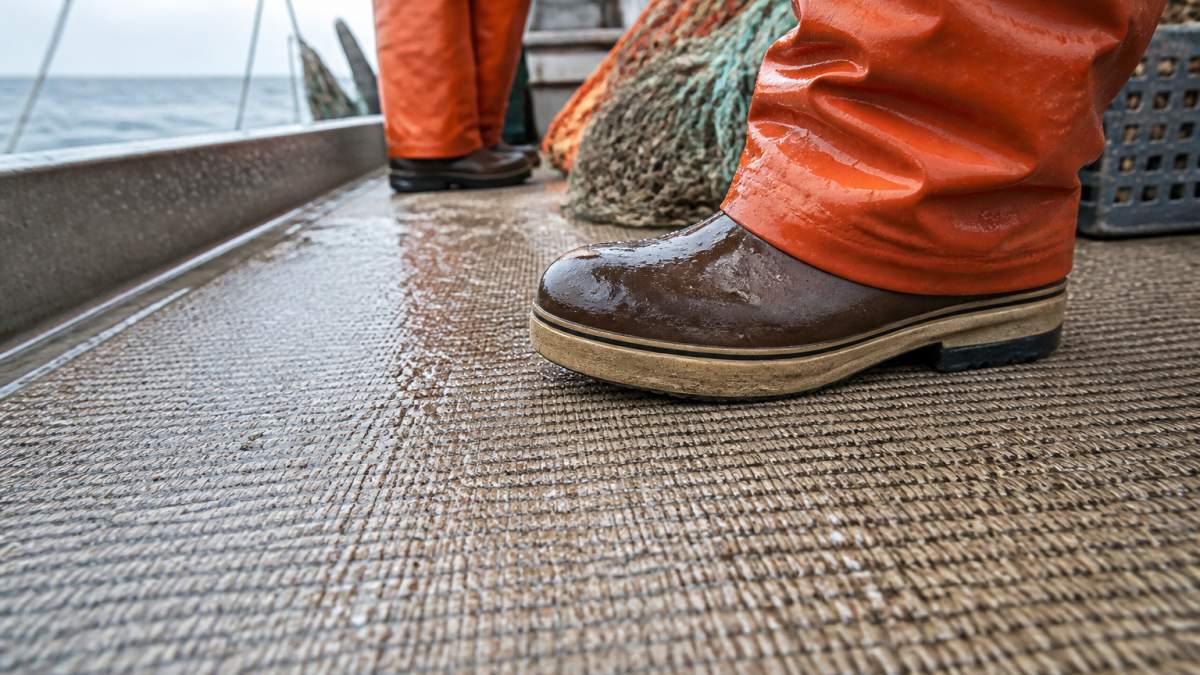
Woven vinyl holds up with proper maintenance, while marine carpet and EVA foam can deteriorate under UV and chemicals.
When sourcing woven vinyl for commercial production, verify that the material meets antimicrobial standards. Commercial vessels accumulate mold and mildew quickly in humid, salt-laden environments. Our SupremeVinyl includes built-in antimicrobial properties.
| Feature | Woven Vinyl | Marine Carpet | EVA Foam |
|---|---|---|---|
| Water Resistance | Excellent | Poor | Good |
| UV Durability | 8+ years | 2-3 years | 3-5 years |
| Slip Resistance | High | Medium | High |
Non-Slip Boat Flooring and Traction on Wet Decks
Slip resistance isn’t optional on commercial boats, it’s a safety requirement. The best marine flooring for commercial boats includes surface texture engineered to maintain grip when decks are wet.
Woven vinyl’s pattern creates micro-texture that prevents water from forming a frictionless film, critical on fishing boats where crews move fast and charter vessels where passenger safety is a liability concern.
Maintaining a secure footing extends beyond the deck surface to the seating areas where worn materials can compromise stability, making it essential to prioritize durable custom boat upholstery that withstands the same harsh marine environment.
Fiberglass nonskid is abrasive and hard to clean; marine carpet offers zero wet slip resistance; modular tiles create seam gaps where debris and water collect. Woven vinyl balances all three: textured for safety, smooth for comfort, seamless to prevent water traps.
If your current flooring choice has failed slip tests or caused crew injuries, switching to a tested non-slip woven vinyl surface reduces liability and demonstrates due diligence to insurers and regulators.
Marine Flooring for High-Traffic Areas and Durability
Commercial boats live in high-traffic zones: crews walk the same paths daily, passengers board repeatedly, and gear gets dragged across decks. The best marine flooring for commercial boats must survive this without visible wear or structural failure.
Woven fibers distribute wear across the entire surface rather than concentrating it in footprint zones. Quality woven vinyl shows minimal wear, while EVA foam, carpet, and PVC can show wear over time.
Woven vinyl also resists bleach, saltwater, fuel additives, and fish waste cleanup products without yellowing or becoming brittle.
The real cost difference between marine flooring options isn’t the purchase price, it’s the warranty expense and customer satisfaction impact. A flooring choice that lasts longer can reduce lifecycle costs and improve customer satisfaction.
According to ASTM International standards for marine material performance, commercial marine flooring must withstand salt spray testing and UV exposure without significant degradation. Woven vinyl meets and exceeds these benchmarks. For manufacturers seeking compliance documentation and third-party validation, this matters during certification and insurance audits.
Woven vinyl also installs quickly with minimal downtime.
Choosing the right flooring for commercial boats comes down to balancing safety, durability, and cost. Woven vinyl delivers all three, and North River Limited has spent 15 years perfecting it for marine and RV manufacturers. Our Seagrass and SupremeVinyl collections are engineered specifically for the demands of commercial vessels, with proven performance in high-traffic environments, antimicrobial properties, and water and UV resistance. Contact North River Limited to discuss how our woven vinyl flooring can improve your production efficiency and customer satisfaction while reducing warranty expenses.
Frequently Asked Questions
What is the best flooring for a commercial boat?
The best marine flooring for commercial boats depends on your vessel type and operational demands. Woven vinyl flooring offers industry-standard durability, water resistance, and UV protection with lower lifecycle costs. EVA foam provides cushioning for crew comfort, while modular tiles enable quick replacement in high-traffic zones. Commercial operators typically prioritize slip resistance, chemical and stain resistance, and easy maintenance over aesthetics.
Is woven vinyl flooring suitable for commercial boats?
Yes. Woven vinyl boat flooring is engineered specifically for marine environments, resisting water, UV exposure, and mildew. Its woven construction provides superior durability in high-traffic areas compared to solid vinyl or carpet. For commercial operations, woven vinyl delivers the durability needed for demanding conditions while maintaining easier cleaning protocols than traditional carpet or foam options.
How do you maintain marine flooring on a commercial boat?
Marine flooring maintenance varies by material. Woven vinyl requires regular hosing and mild detergent cleaning to remove salt spray and debris. Avoid harsh chemicals that degrade vinyl seams. For EVA foam, use soft brushes to prevent surface damage. Modular tiles can be individually removed and cleaned or replaced. Inspect seams and adhesive quarterly, especially in high-traffic areas, and address water intrusion immediately to prevent substrate damage.