

Last Updated: November 24, 2026
Quick Summary
Choose marine flooring adhesives by matching them to your flooring backing and substrate, then checking cure time against your production line speed. Test every substrate and backing pairing on real panels before scaling up production.
- Identify the flooring backing, substrate, and exposure to moisture, salt air, and temperature swings.
- Request compatibility data from your adhesive supplier for your specific backing and substrate pairing.
- Do not assume one adhesive works on every substrate in your line; test each pairing first.
- Make sure the adhesive’s cure time fits between production stations so panels do not stack up or shift.
- Run a small bond trial on your real substrates, cured under normal shop conditions and repeated across shifts.
Table of Contents
- Matching Marine Vinyl Flooring Adhesive to Your Substrate and Backing
- Checking Marine Flooring Adhesive Cure Time Against Your Line Speed
- Running Marine Flooring Bond Testing Before Your First Production Run
- Frequently Asked Questions
Matching Marine Vinyl Flooring Adhesive to Your Substrate and Backing
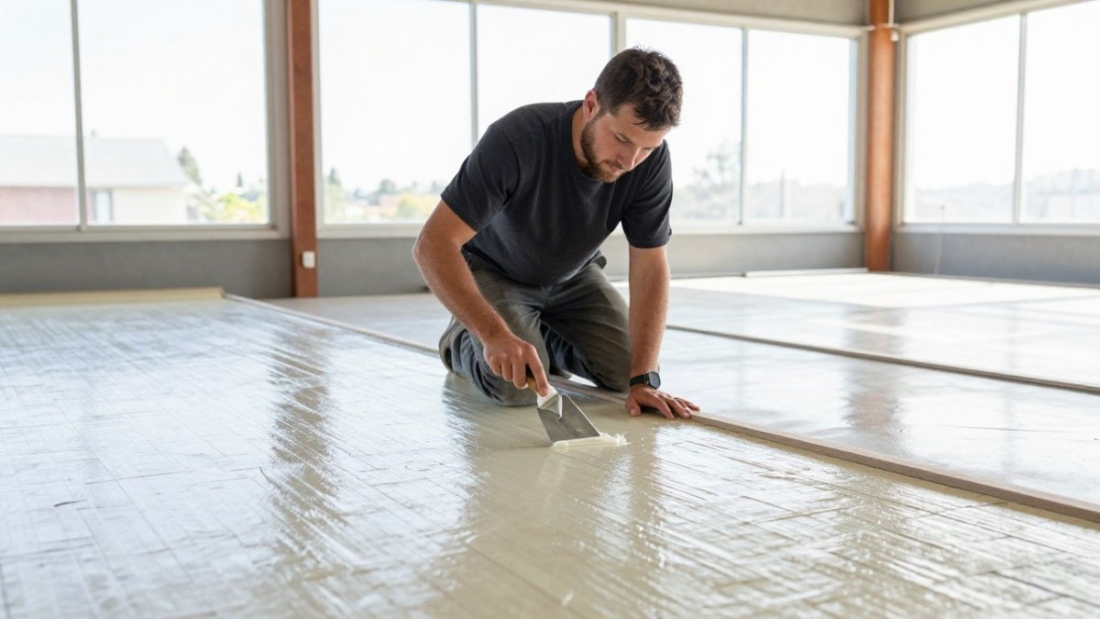
Woven vinyl flooring for RV and marine manufacturing depends on the adhesive you pick to stay down. Choosing marine flooring adhesives starts with two questions: what is the flooring backed with, and what is the subfloor made of?
Identify the flooring backing, the substrate (marine plywood, sealed wood, aluminum, or fiberglass), surface condition, and exposure to water, humidity, salt air, and temperature swings. Then request compatibility data from your adhesive supplier confirming the adhesive works with your specific backing and substrate pairing.
Watch out: Do not assume one adhesive works on every substrate in your line. Test each pairing before standardizing.
| Factor | What to Check | Why It Matters |
|---|---|---|
| Flooring backing | Backing type and material | Determines bond chemistry |
| Substrate | Plywood, aluminum, fiberglass, sealed wood | Affects adhesion and prep |
| Exposure | Moisture, salt, temperature | Drives long-term durability |
Checking Marine Flooring Adhesive Cure Time Against Your Line Speed
Cure time matters most when it runs up against your production schedule: if an adhesive needs longer to set than the time between stations, panels stack up, shift, or get handled before they bond. Compare working time, cure time, line speed, and installation conditions, and ask your supplier for figures under the conditions your plant actually runs, lab numbers measured at ideal temperatures can mislead on a warm or humid floor. When production also involves repairing rubber components, account for how industrial repair resin’s working and cure times fit the same handling sequence.
Running Marine Flooring Bond Testing Before Your First Production Run
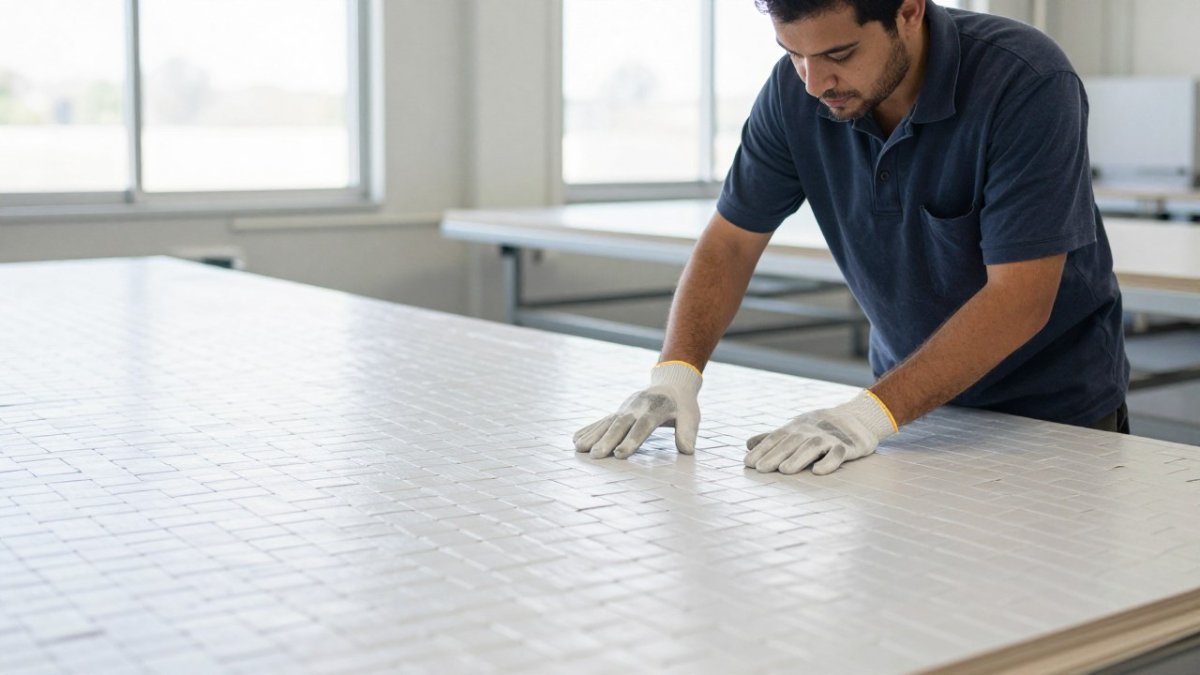
Test before you scale: a small trial of marine flooring adhesives on your actual substrates and backing reveals problems a datasheet cannot. Prepare test panels with your real substrates cleaned as your line cleans them, apply the adhesive using your production method and coverage, cure under normal shop conditions, then peel the flooring and inspect the bond line. Repeat across several shifts and temperature conditions, and record results to compare batches later.
Common mistakes include skipping surface cleaning, testing only in ideal conditions, and changing the adhesive mid-run without retesting. Treat every substitution as a new test.
For current product information and a quote, contact North River Limited directly.
Ready to find the right flooring for your line? Contact North River Limited for product details, technical guidance, and a quote tailored to your production needs.
Frequently Asked Questions
What is the best adhesive for marine vinyl flooring?
There is no single best adhesive. The right choice depends on the flooring backing, the substrate (marine plywood, aluminum, fiberglass or sealed wood), the temperature and humidity the boat or RV will see, and how long your line can wait for cure. Ask your adhesive supplier for a compatibility chart covering your exact materials, then confirm the choice with bond tests on your own panels before committing to production. Pricing depends on quantity, delivery and packaging, so request a current quote from North River Limited at northriverlimited.com.
How do you test marine flooring adhesive bond strength before production?
Bond a sample of your actual flooring to your actual substrate using the production adhesive, application method and cure schedule. Let the samples cure for the full specified time, then expose some to water, humidity and temperature cycling similar to real service conditions. Attempt to peel the flooring and record whether the failure is adhesive, cohesive or in the material itself. Set acceptance criteria before testing so the results are judged against a fixed standard rather than opinion.
What factors should manufacturers consider when selecting marine flooring adhesive?
Consider the flooring backing, substrate material and surface condition, the adhesive type and its working and cure times, moisture and saltwater exposure, and temperature swings in service. Also weigh how the adhesive fits your line speed, installation training and quality checks. Verify compatibility with a sample bond test rather than relying on a general product claim.
