

Last Updated: November 21, 2026
Quick Summary
Prevent mold growth under marine flooring by sealing every deck penetration, storing the boat with the bow raised so water drains aft, and rebedding fittings each season. Lifting removable panels after wet trips and keeping air moving lets trapped moisture dry out fast.
- Seal screw holes and hatch rims to stop water from getting trapped under marine flooring.
- Store boats with the bow raised so water drains aft during storage.
- Rebed deck fittings each season to keep water from slipping beneath the vinyl.
- Pull up snap-in flooring after every wet trip so the subfloor can dry.
- Inspect seams, edges, soft spots, and musty areas each season for adhesive failure.
Table of Contents
- Boat Deck Moisture Prevention: Stopping Water Before It Gets Trapped
- Removable Boat Flooring and Ventilation That Keep Air Moving
- Boat Flooring Adhesive Failure: Seams, Edges, and Water Intrusion
- Frequently Asked Questions
Boat Deck Moisture Prevention: Stopping Water Before It Gets Trapped
Moisture is the root cause of mold growth under marine flooring systems, and marine flooring is where prevention starts. Stop water at the deck level and you remove the conditions mold needs to survive.
A few drops of standing water under a panel can start mildew within days.
Seal every deck penetration, including screw holes and hatch rims, check the U.S. Coast Guard boating safety resources for deck hardware guidance, store boats with the bow raised so water drains aft, and rebed fittings each season. Keeping water out at fittings and helping it drain away also limits the damp conditions that let mold take hold beneath flooring, and this guide offers another perspective on preventing moisture from lingering under floorboards.
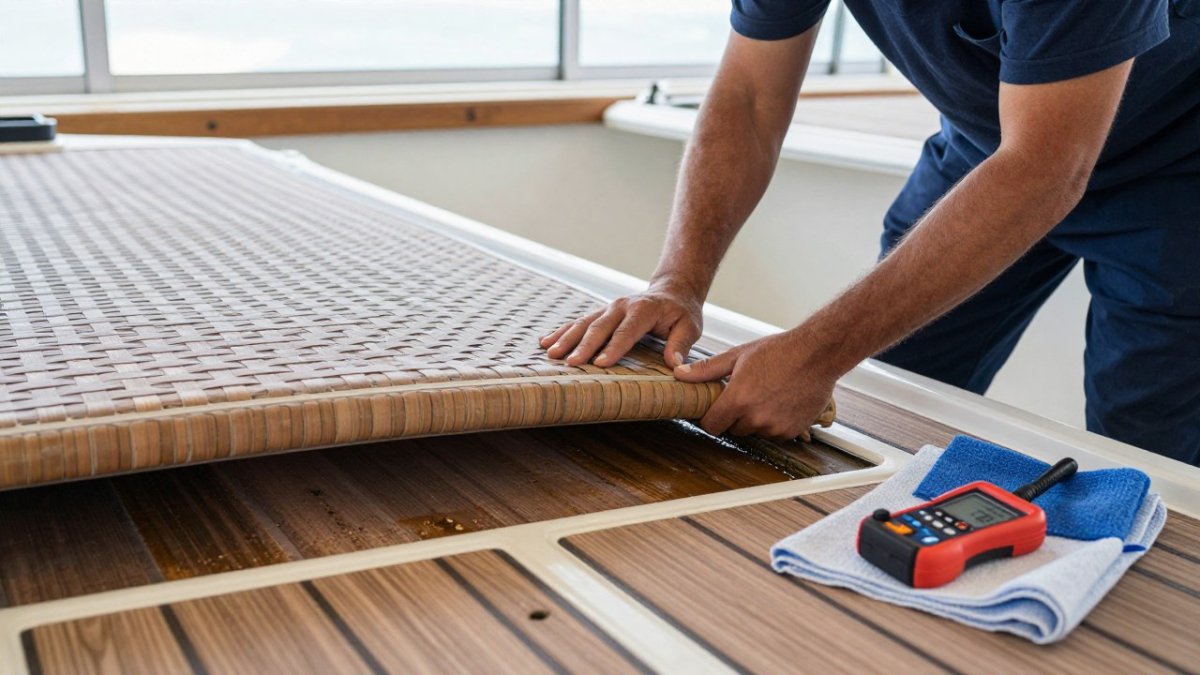
These deck-level habits stop water from getting trapped under marine flooring in the first place.
| Step | What to do | Frequency |
|---|---|---|
| Seal deck penetrations | Seal screw holes and hatch rims | Ongoing |
| Store the boat | Keep the bow raised so water drains aft | During storage |
| Rebed fittings | Rebed deck fittings | Each season |
Removable Boat Flooring and Ventilation That Keep Air Moving
Removable boat flooring is one of the simplest defenses against mold: lift the panels, let air reach the subfloor, and trapped moisture dries out fast.
Airflow matters too: a covered boat with no ventilation becomes a humid box where damp air condenses and feeds mildew. Pull up snap-in flooring after every wet trip, prop storage covers, use a desiccant in closed compartments, and run a small fan during off-season storage.
Boat Flooring Adhesive Failure: Seams, Edges, and Water Intrusion
Boat flooring adhesive failure is a common entry point for water: when glue lifts at a seam or edge, water slips beneath the vinyl and sits against the subfloor.
Each season, inspect seams between flooring sections, edges along hatches and lockers, soft or spongy spots, and areas with a musty odor after rain.
For installation details that reduce moisture entrapment, the American Boat & Yacht Council standards offer useful reference points on materials and moisture control.
A clean, dry, fully cured subfloor before install is an important step in reducing the risk of adhesive failure.
Mold under marine flooring starts with moisture you cannot see. North River Limited helps manufacturers prevent it with durable woven vinyl flooring built for wet marine and RV conditions. Our Seagrass and SupremeVinyl collections deliver industry-standard durability and specialized marine solutions. Get started with North River Limited and specify flooring that holds up to real-world moisture.
Frequently Asked Questions
What causes mold to grow under marine flooring?
Mold needs three things: moisture, organic residue, and still air. Under marine flooring, water gets in through seams, unsealed edges, and failed adhesive, then sits against the subfloor with no airflow to dry it. Dirt and grime trapped during installation feed the growth. The fix is a dry deck before covering, sealed edges, and ventilation. Installation and drying still decide whether moisture stays out.
Does removable boat flooring help prevent mold?
Yes, when it is installed correctly. Removable boat flooring lets you lift panels after a wet day, dry the subfloor, and let air circulate underneath. That breaks the trapped-moisture cycle that feeds mold under vinyl flooring. The key is a full dry-out before reinstalling, plus periodic inspection of the deck beneath. If panels go back down while the subfloor is still damp, you have recreated the same problem.
How often should you inspect beneath marine flooring?
Check beneath the flooring at least twice a season, and after any trip with heavy spray, rain, or a bilge overflow. Look for soft spots, musty odor, lifted seams, and discoloration on the subfloor. Pay extra attention to edges and seams, where boat flooring adhesive failure usually starts. Catching dampness early lets you dry and reseal before mold takes hold, which is far cheaper than replacing a rotted deck section.
