

Table of Contents
- Woven Vinyl Flooring Pros and Cons for Boat Decks
- Marine Flooring Adhesive Requirements and Installation
- How to Clean Marine Deck Flooring
- What to Look For in a Marine Flooring Supplier
- Frequently Asked Questions
Last Updated: September 13, 2026
Woven Vinyl Flooring Pros and Cons for Boat Decks
Waterproof flooring for boat decks is now the default spec for manufacturers who need a surface that survives sun, salt, and constant foot traffic. This guide from North River Limited covers the material choices, adhesive systems, and cleaning routines that determine whether that flooring lasts three seasons or fifteen.
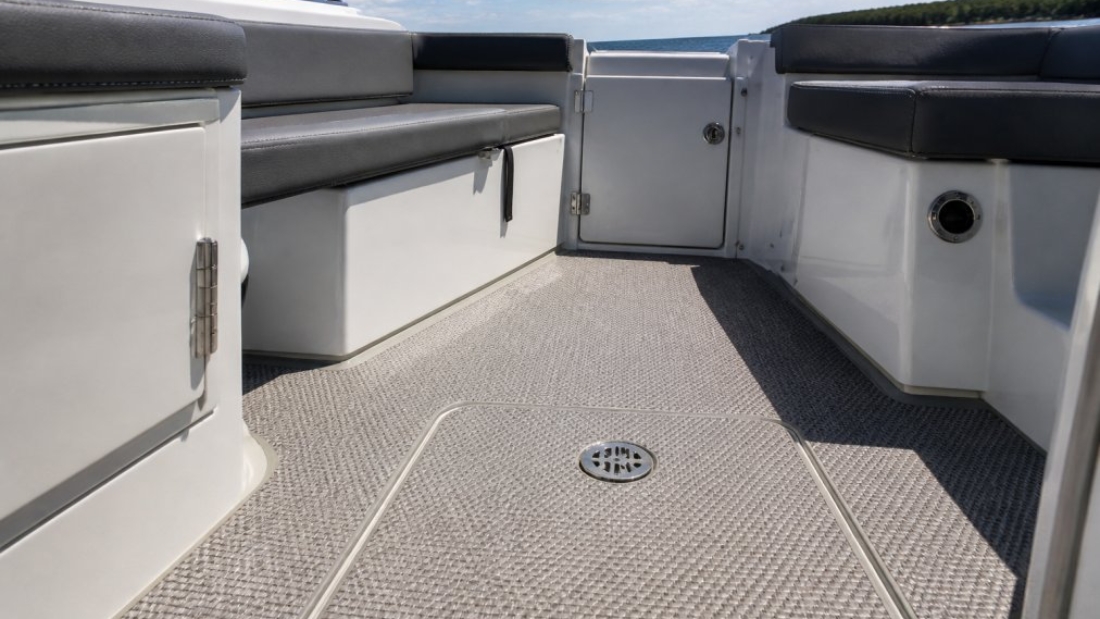
Woven vinyl is a composite deck covering made by weaving vinyl strands into a fabric-like sheet, then backing it for adhesion to a subfloor. The weave drains water rather than letting it pool, and the PVC resists UV degradation far better than carpet or natural fiber.
The pros: the open weave drains spray and rain, marine-grade woven vinyl resists fading and chalking under continuous sun, some constructions inhibit mold and mildew, and the texture grips better when wet than smooth vinyl or gelcoat.
The cons: subfloor prep is unforgiving, since any ridge, screw head, or old adhesive lump telegraphs through the finished surface; the wrong adhesive fails in heat cycles and causes most callbacks; a sloppy edge cut at a hatch or gunwale is permanent; and cheaper imports use thinner vinyl that fails at the weave intersections.
The single most common mistake is treating woven vinyl like carpet and gluing it down with construction adhesive. Marine flooring needs a pressure-sensitive or two-part adhesive rated for thermal cycling. Using the wrong product is the leading cause of bubbling and edge lift within the first year.
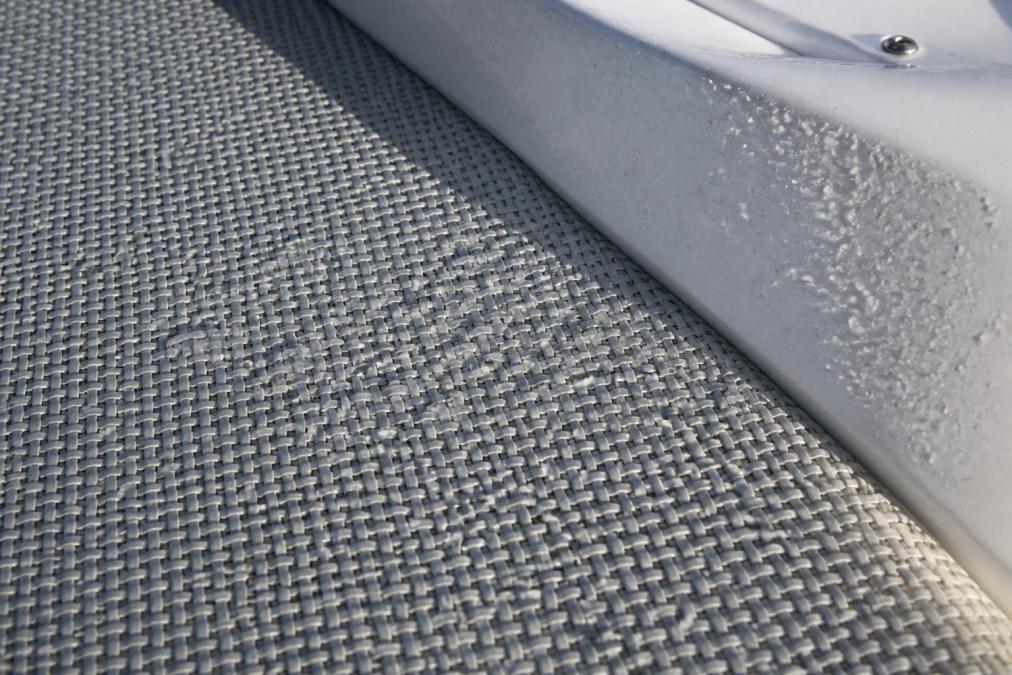
For procurement managers, the deciding factor is consistency: can the material be ordered in the same color and backing spec across a multi-year production run?
Marine Flooring Adhesive Requirements and Installation
Marine flooring adhesive must bond woven vinyl to plywood, aluminum, or composite subfloors while tolerating thermal expansion from direct sun. There is no universal adhesive; the right product depends on the substrate, the climate, and whether installation happens in a climate-controlled facility or an open yard.
The American Boat and Yacht Council standards for marine systems provide the baseline framework for materials used in marine construction, though specific adhesive selection remains manufacturer-driven.
Three adhesive families dominate marine installations:
- Pressure-sensitive adhesives (PSA). Stay slightly tacky and let the flooring move with the substrate. Best for interior cabins and climate-controlled production.
- Two-part polyurethane. Highest bond strength and heat resistance. Common for exterior decks in hot climates.
- Water-based contact adhesives. Lower VOC, easier cleanup, limited heat tolerance. Suited to interior RV applications.
Installation follows a consistent sequence regardless of adhesive: verify subfloor moisture; fill and sand all seams, screw heads, and imperfections; dry-fit and mark trim lines; apply adhesive per the trowel notch spec; roll with a weighted roller; trim edges after the adhesive sets; and allow full cure before traffic or water exposure.
Acclimate the flooring to the installation environment for at least 24 hours before laying it. Vinyl that’s been stored in a cold warehouse will expand once it reaches a warm production floor, and that expansion shows up as wrinkles that no amount of rolling will remove.
The Occupational Safety and Health Administration guidance on adhesive ventilation is worth reviewing before specifying any solvent-based product for an enclosed production area. Ventilation requirements are not optional.
How to Clean Marine Deck Flooring
Cleaning marine deck flooring takes minutes with the right routine and causes permanent damage with the wrong one. Woven vinyl’s enemies are abrasive pads, solvent cleaners, and high-pressure spray directed at seams.
A weekly routine handles most conditions: rinse with fresh water to remove salt and grit, scrub with a soft-bristle brush and mild dish soap, rinse again and air dry, and address stains immediately. Avoid bleach on colored flooring, since it can strip pigment even when the base material is UV-stable. Never exceed the manufacturer’s recommended PSI, and never aim the nozzle at a seam or edge.
The Environmental Protection Agency guidance on boat washing and runoff is relevant here for facilities near waterways, since wash water containing cleaners and debris is regulated in many watersheds.
The cleaning products that work best on woven vinyl are the ones that work worst on gelcoat: mild soap, soft brushes, and low pressure. Keep a separate set of cleaning tools for the deck so abrasive pads never migrate from other jobs.
| Cleaning Task | Frequency | Method | Products to Avoid |
|---|---|---|---|
| Salt and grit rinse | After every use | Fresh water rinse | None |
| General scrub | Weekly | Soft brush, mild soap | Abrasive pads |
| Stain treatment | As needed | Diluted marine cleaner | Bleach on colored vinyl |
| Deep clean | Monthly | Low-pressure wash | High-PSI pressure washer |
| Seam inspection | Quarterly | Visual check | Solvents at edges |
What to Look For in a Marine Flooring Supplier
Supplier selection comes down to four things: material consistency, adhesive compatibility documentation, batch flexibility, and technical support during changeover.
Material consistency matters most for OEMs running continuous production. A supplier who can’t hold a color match across batches forces rework and complaints. Ask for production samples from multiple lots before committing.
Adhesive compatibility is where most suppliers provide nothing useful. A good supplier publishes a tested adhesive list with substrate pairings and climate caveats. If they can’t tell you which adhesive to use in a hot-climate exterior application, that’s a red flag.
Batch flexibility separates suppliers built for large OEMs from those serving the broader market. Smaller builders need short runs in custom colors, and a supplier who only quotes container quantities isn’t serving that segment.
Technical support during changeover is the difference between a smooth transition and a stalled line. Documentation, spec sheets, installation training, and quality check protocols should all be part of the package.
This is where North River Limited operates. Our woven vinyl collections, including Seagrass and SupremeVinyl, are engineered for marine and RV environments and supplied directly to manufacturers.
Switching flooring suppliers is a production decision, not a purchasing decision. North River Limited has spent over 15 years helping marine and RV manufacturers navigate that transition, with waterproof flooring built for UV exposure, moisture, and the realities of a working assembly line. Our collections are available directly to manufacturers, so you get technical support, batch flexibility, and pricing that reflects a direct relationship rather than a distributor markup. Contact us to discuss your production volume and request samples from our Seagrass and SupremeVinyl lines.
Frequently Asked Questions
What is the most durable waterproof flooring for a boat deck?
Woven vinyl flooring is widely used for boat decks because it resists water, UV, and mildew. Its durability comes from the woven construction, which holds up to foot traffic and moisture without swelling like wood or carpet. For manufacturers, the key is choosing a product engineered for marine environments, such as those with antimicrobial treatments. North River Limited offers woven vinyl collections designed for these conditions.
Is woven vinyl better than EVA foam for boat flooring?
Both materials work for boat decks, but they suit different priorities. EVA foam is soft underfoot and affordable, yet it can compress and fade with heavy UV exposure. Woven vinyl resists UV and moisture better over time, making it a stronger choice for OEM production lines. The pros and cons depend on your budget, expected lifespan, and installation process. North River Limited’s woven vinyl is built for marine and RV durability.
Does marine-grade vinyl flooring require special maintenance?
Marine-grade vinyl needs regular but simple care. Rinse with fresh water after saltwater exposure, then clean with a mild soap and soft brush to remove dirt and prevent mildew. Avoid harsh chemicals that can break down the backing or adhesive. For boat deck flooring, staying on top of cleaning extends the material’s life and keeps the surface safe. North River Limited recommends following the manufacturer’s care instructions for best results.