

Last Updated: November 5, 2026
Quick Summary
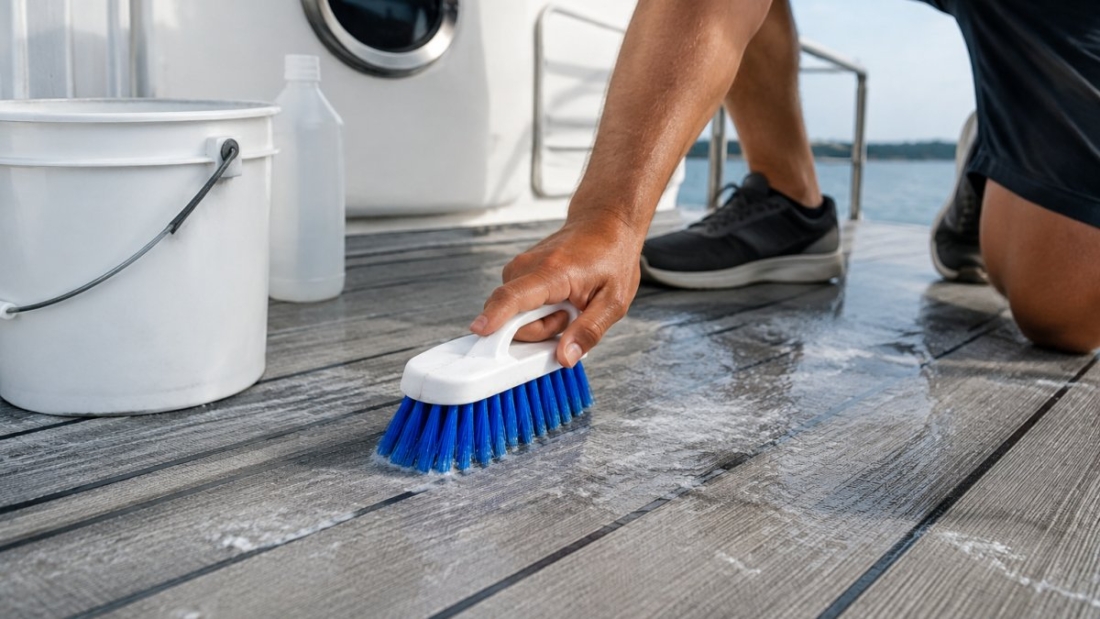
Rinse loose salt off marine flooring with fresh water before scrubbing, then wash with a few drops of mild soap in warm water using a soft brush and rinse again. For hard salt stains, soak a warm wet towel over the spot for ten minutes before brushing.
- Rinse twice after a winter haul-out because road salt is heavier and mixed with grit.
- Mix one part white vinegar with three parts fresh water for stains that will not lift.
- Brush synthetic teak along the grain and avoid pressure washing, which erodes the texture.
- A post-trip washdown with fresh water stops salt buildup before it starts.
- Squeegee off standing water and leave the cover off for an hour to air dry.
Table of Contents
- Step 1: Rinse Loose Salt Off Marine Flooring Before You Scrub
- Step 2: Wash With Mild Soap or a Floor Cleaner for Salt Residue
- Step 3: How to Clean Salt Off Marine Flooring Stains That Won’t Lift
- Step 4: Match Your Cleaning Method to the Flooring Material
- Step 5: Handle Saltwater Residue Differently From Winter Road Salt
- Step 6: Use the Right Tools Without Damaging the Surface
- Step 7: Dry, Prevent, and Keep Salt Off Between Trips
- Frequently Asked Questions
Step 1: Rinse Loose Salt Off Marine Flooring Before You Scrub
Salt left on a boat deck dries into hard crystals that act like sandpaper and grind into woven vinyl. Start with fresh water, not soap.
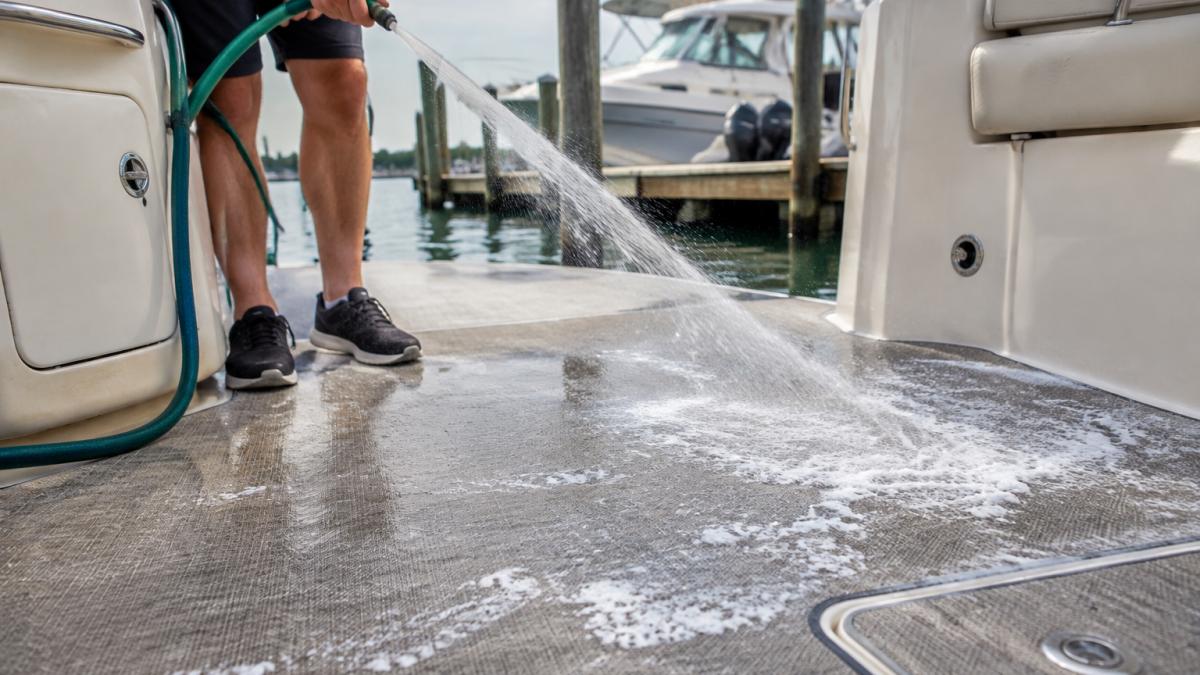
Use fresh water, never saltwater. After a winter haul-out, road salt from the trailer is heavier and mixed with grit, so rinse twice before brushing.
Step 2: Wash With Mild Soap or a Floor Cleaner for Salt Residue
Once loose salt is gone, wash the marine flooring with a few drops of mild soap in warm water, applied with a soft brush, then rinse with fresh water before it dries.
Dilution matters more than the product; pouring dish soap straight onto the deck leaves a film that traps dirt.
Work in small sections with light pressure, rinsing each before moving on.
Do you need a specialty floor cleaner for salt residue? Not always. The EPA Safer Choice product database lists cleaners that meet safer-chemistry standards if you want to check a product before buying.
For anyone asking how to get salt off floors without vinegar, soap and water is the answer; vinegar is acidic and repeated use can dull surfaces.
Step 3: How to Clean Salt Off Marine Flooring Stains That Won’t Lift
Hard salt stains need a pre-wash soak, not more scrubbing. Lay a warm, wet towel over the stain for ten minutes, then scrub with a soft brush so crystals lift instead of scratching.
If that fails, mix one part white vinegar with three parts fresh water, apply for five minutes, and rinse thoroughly.
| Flooring Type | Best Method | Watch Out For |
|---|---|---|
| Woven vinyl | Warm soapy water, soft brush | Harsh chemicals dull the weave |
| Synthetic teak | Vinegar solution, brush along grain | Stiff bristles scratch the grain |
| EVA foam | Mild soap, low pressure, air dry | Trapped water in seams |
| Hard floors | Soap solution, microfiber mop | Soap film if not rinsed |
For deep-set buildup, a salt neutralizer for floors chemically binds salt so it rinses away. Follow the label dilution and test a hidden corner first.
BoatUS Foundation cleaning guidance recommends gentle methods for deck surfaces, and that advice holds for marine flooring too. Drying matters as much as washing. Use a squeegee or microfiber towel to pull standing water off the deck, then let the floor air dry fully before anyone walks on it. Trapped moisture under a cover is what grows mildew.
Step 4: Match Your Cleaning Method to the Flooring Material
Every marine flooring material reacts differently to water, soap, and brushes.
Synthetic teak has fine grain lines that trap salt; brush along the grain and avoid pressure washing, which erodes the texture.
EVA foam sheds water well, but seams trap salt and soap; use less water and towel-dry the seams.
Woven vinyl is dense and forgiving; warm soapy water and a soft brush handle most residue, and harsh chemicals are the main risk.
Hard floors on cabin soles take a microfiber mop and mild soap, rinsed often.
Step 5: Handle Saltwater Residue Differently From Winter Road Salt
Saltwater residue and winter road salt are not the same problem. Saltwater dries into a thin film that rinses off easily; road salt is heavier, mixed with grit, and often baked on.
For saltwater, a post-trip washdown with fresh water is enough. For road salt, rinse twice, then use soap and a soft brush, and pre-wash the trailer deck and tires before they touch your boat flooring. Keeping road salt off the deck and tires makes each washdown easier, and cleaning flooring properly also means adjusting your routine to the flooring material.
Salt left through winter storage can stain woven vinyl and synthetic teak, so deep clean before you cover the boat.
Step 6: Use the Right Tools Without Damaging the Surface
A soft brush, microfiber mop, garden hose, and two buckets cover most jobs, and a foam gun helps spread soap on larger decks.
Centers for Disease Control and Prevention guidance on safe cleaning practices covers basic product safety, including ventilation and glove use. Read the label on any cleaner before it touches the floor.
Step 7: Dry, Prevent, and Keep Salt Off Between Trips
Prevention beats scrubbing: a post-trip washdown with fresh water takes minutes and stops salt buildup before it starts.
Then dry it, squeegee off standing water and leave the cover off for an hour so air moves across the floor surface.
Our woven vinyl collections, including Seagrass and SupremeVinyl, are engineered for marine and RV environments, and North River Limited has over 15 years of experience in woven vinyl flooring.
Frequently Asked Questions
What is the best marine salt remover for boat flooring?
Start with fresh water and a mild soap before reaching for a specialty product.
How often should you rinse salt off boat flooring?
Rinse after every trip in saltwater, and again before storage if the boat sits for weeks. A quick fresh water washdown takes a few minutes and stops salt buildup from drying into the surface.
Can you clean marine flooring with vinegar?
Diluted white vinegar in water works for light salt stains on many hard floors and is safe on most marine flooring when used sparingly. Mix roughly one part vinegar to four parts warm water, apply with a soft brush, and rinse thoroughly with fresh water so no acidic residue stays on the surface. Skip vinegar on EVA foam if the manufacturer advises against acids, and never combine it with bleach.
Salt residue is easy to ignore until it’s ground into the weave. Build a rinse-and-dry habit now, and your deck stays clean and safe all season. If you’re specifying flooring for a production line, North River Limited can help you pick a material built for the washdown routine. Our woven vinyl flooring offers UV resistance, antimicrobial protection, and a finish that holds up to salt and sun. Contact us to request samples and find the right collection for your build.
