

Last Updated: November 1, 2026
Quick Summary
Marine flooring UV resistance is judged by how well the material keeps its color and physical properties under ultraviolet exposure, and it is measured through controlled UV light and humidity testing. Buyers should confirm the test method, exposure length, and measured change before accepting a UV claim.
- Ask suppliers which UV test method they used on the product.
- Confirm how long the samples were exposed during testing.
- Request color and surface condition data from before and after exposure.
- Check that colorfastness test data matches the exact product you plan to order.
- Request the UV test report for your specific product line before ordering.
Table of Contents
- Marine Flooring UV Testing: How Resistance Is Measured
- Colorfastness and Material Choice for UV-Resistant Boat Flooring
- Requesting Your Next UV Test Report from North River Limited
- Frequently Asked Questions
Marine flooring has to survive sunlight, salt spray, and constant moisture, and UV exposure is often the first thing to break it down. For procurement teams sourcing for boat and yacht builds, the question is not just whether a floor is “UV resistant” but how that claim was measured. This guide explains how UV resistance is tested and what manufacturers should ask for before they buy.
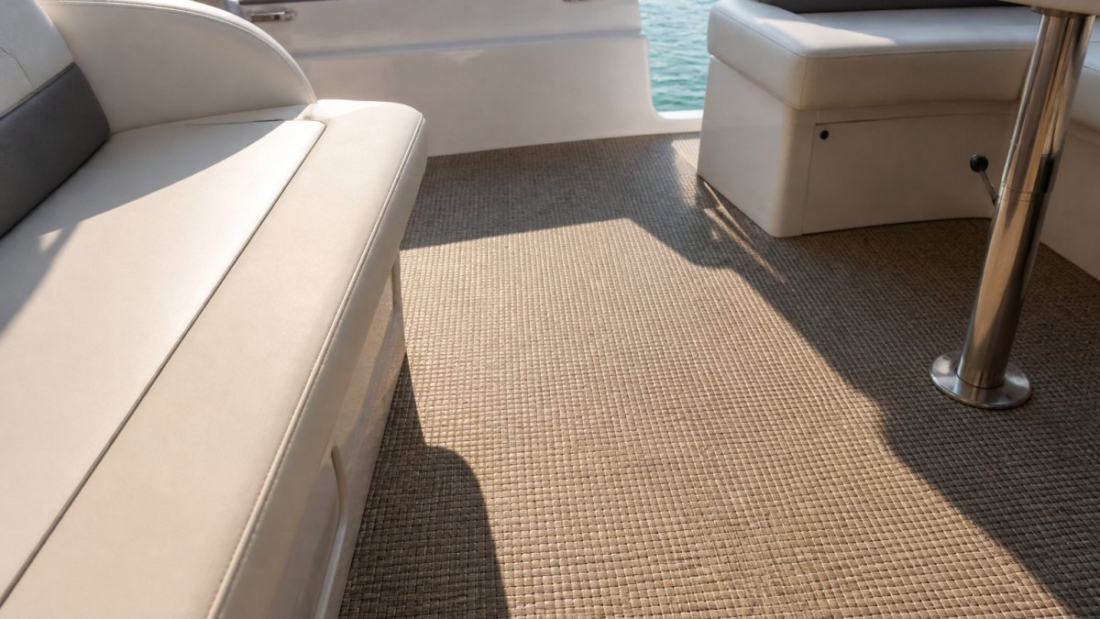
Marine flooring is a surface material installed on boat decks and interior cabins, where it is exposed to sunlight, salt, and humidity. UV resistance describes how well that material keeps its color and physical properties under ultraviolet radiation. Research on the subject is limited in what we can verify for this article, so the points below focus on practical evaluation. Testing methodologies for these marine environments often mirror the rigorous standards applied to durable deck coatings, providing a broader context for how surface integrity is maintained across various high-exposure settings.
Marine Flooring UV Testing: How Resistance Is Measured
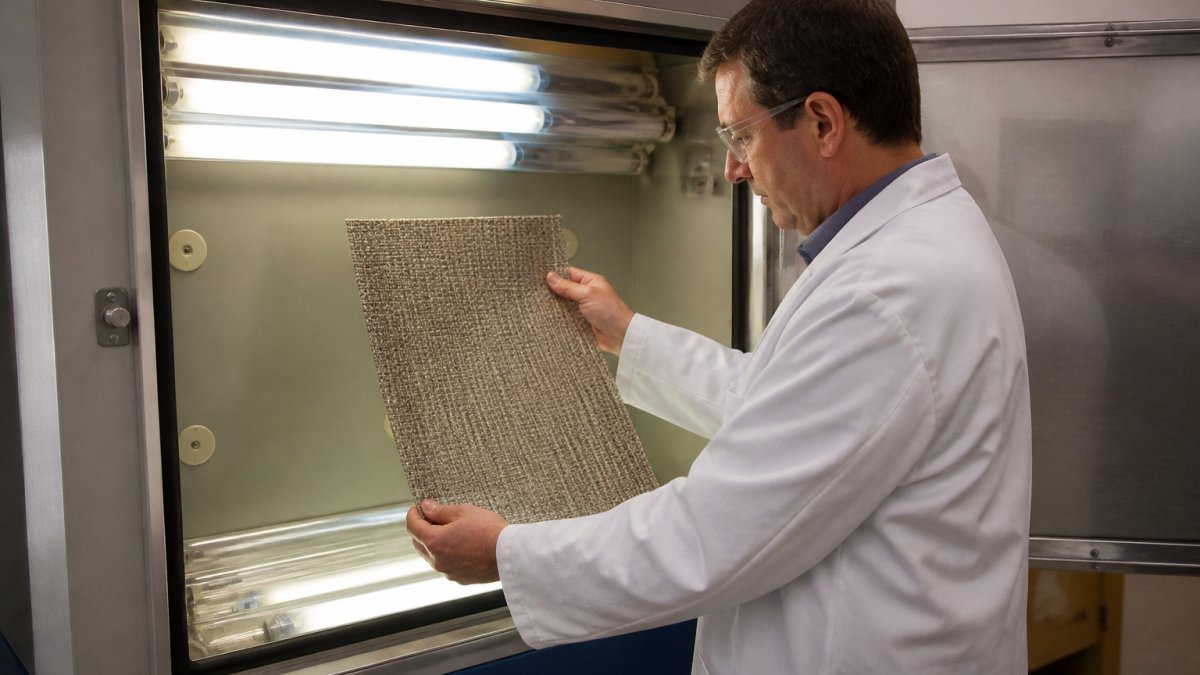
A UV claim on a product sheet means little until you know the test behind it. Laboratories typically expose samples to controlled UV light and humidity cycles, then compare color and surface condition before and after. Ask suppliers which test method they used, how long the exposure ran, and what change they measured. A vague “UV tested” label without those details is a reason to ask more questions.
When you review a supplier’s UV claim, these are the points to check.
| Check | What to ask for | Why it matters |
|---|---|---|
| Test method | Which UV test was used | A bare “UV tested” label is not enough |
| Exposure length | How long the samples ran | Shows how long the test simulated |
| Measured change | Color and surface condition before and after | Shows what actually changed |
Colorfastness and Material Choice for UV-Resistant Boat Flooring
Colorfastness tells you whether a floor will fade in service, which matters for appearance and for consistency across production runs. Request samples and the supplier’s test data, then check that the data matches the product you will actually order.
Requesting Your Next UV Test Report from North River Limited
Before your next order, ask North River Limited for the UV test report on the exact product line you plan to buy. Contact North River Limited for current pricing and documentation.
Frequently Asked Questions
What UV resistance standards apply to marine flooring?
No single federal law sets a UV resistance requirement for marine flooring in the United States. Manufacturers usually reference ASTM test methods for UV exposure and colorfastness, and buyers typically specify those methods in purchase requirements. Some vessel and interior fire-safety rules from the U.S. Coast Guard apply separately and do not measure UV performance. Ask your supplier which ASTM method was used, the exposure duration, and the test report date, then compare those details across products before you commit to a material.
How is UV resistance tested in marine flooring?
Samples are placed in an accelerated weathering chamber that cycles ultraviolet light, heat and moisture to simulate years of sun exposure in a short period. After exposure, technicians measure color change and surface changes such as cracking, gloss loss or stiffening. Results are reported as a color difference value. A useful report names the test method, exposure hours and the measured change, so you can compare suppliers on the same basis.
Does UV-resistant marine flooring still need regular maintenance?
Yes. UV resistance slows fading but does not stop surface wear from salt, grit, cleaning chemicals or abrasion. Rinse flooring with fresh water after saltwater exposure, clean with a pH-neutral cleaner, and inspect seams and edges each season. Maintenance on a schedule helps the color and surface perform closer to the test results your supplier reported.
