

Table of Contents
- Marine Grade Woven Vinyl Flooring: The Durability Standard
- Best Flooring for RV High Traffic Areas: What Holds Up
- Moisture Resistant Flooring for Campers: Marine vs RV Performance
- Durability Differences: Marine vs RV Flooring Compared
- What Most Buyers Get Wrong About Long-Term Performance
- Frequently Asked Questions
Last Updated: September 30, 2026
Marine Grade Woven Vinyl Flooring: The Durability Standard
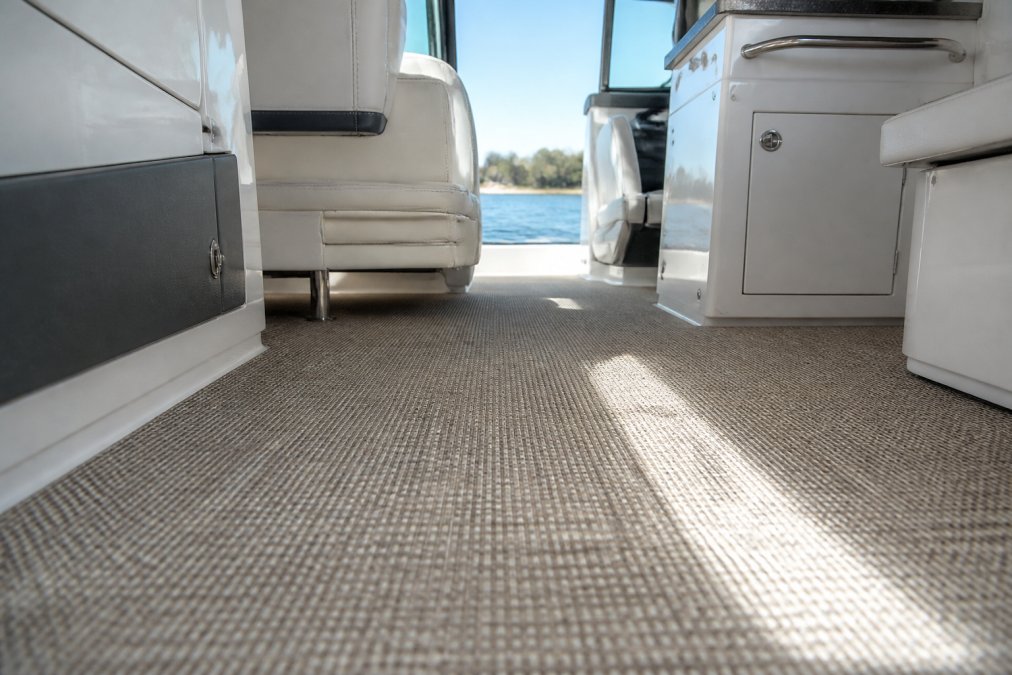
Marine grade woven vinyl flooring is a synthetic, PVC-based material with an open-weave construction engineered to drain water, resist UV degradation, and deliver rv flooring durability under constant foot traffic. North River Limited has spent over 15 years supplying woven vinyl directly to manufacturers.
The American Boat and Yacht Council standards for marine materials provide useful reference points for evaluating UV and moisture performance, even for RV-specific applications.
When evaluating wear layer thickness, ask suppliers for the actual mil specification rather than a general “heavy-duty” claim.
Best Flooring for RV High Traffic Areas: What Holds Up
The best flooring for RV high traffic areas balances slip resistance, stain resistance, and cushioning without adding weight. Entryways, galley kitchens, and slide-out zones take the most abuse.
| Flooring Type | Lifespan | Best For | Key Trade-Off |
|---|---|---|---|
| Woven vinyl (marine-grade) | Varies | High-traffic entries, wet zones | Contact us for pricing |
| Closed-cell EVA foam | Varies | Comfort-focused decks | Shorter lifespan |
| Marine carpet | Varies | Low-traffic sleeping areas | Traps moisture, stains |
Woven vinyl is heavier than carpet, lighter than tile, and far more resistant to moisture wicking into the subfloor. Adhesive compatibility is the most overlooked detail; North River Limited’s SupremeVinyl line uses formulations tested for adhesive bonding stability, not just surface water resistance.
Moisture Resistant Flooring for Campers: Marine vs RV Performance
Moisture resistant flooring for campers must handle surface water and subfloor condensation. Marine-grade woven vinyl addresses the first through its hydrophobic weave; the second depends on seam sealing and subfloor preparation.
A common mistake is assuming “waterproof surface” means “waterproof system.” If a seam fails or adhesive lifts, water reaches the substrate, so subfloor prep and seam sealing matter as much as the material.
Skipping subfloor moisture testing before installation is the most expensive shortcut in RV flooring. Trapped moisture under an otherwise waterproof surface leads to delamination and rot that only shows up after the warranty period ends.
Vinyl expands and contracts with temperature swings, so RV flooring in hot climates needs room to move at the edges. Rigid installation without expansion gaps is a leading cause of buckling.
Durability Differences: Marine vs RV Flooring Compared
The core durability difference between marine and RV flooring is exposure profile: marine faces constant water and salt spray, while RV faces intense UV, temperature swings, and road vibration.
RV floors face daily sun, condensation and leaks, and subfloor flex that stresses adhesive bonds and seams, making rv flooring durability a constant test; both see concentrated wear at entry points and galley areas. Woven vinyl handles all four better than carpet or standard sheeting because its weave distributes stress and lets moisture pass through rather than sit against the subfloor.
For manufacturers sourcing for both marine and RV lines, a single marine-grade woven vinyl spec can cover both applications, provided the adhesive and subfloor prep match each environment’s demands.
What Most Buyers Get Wrong About Long-Term Performance
Long-term failures rarely trace back to the flooring material itself, but to installation, subfloor condition, and adhesive choice. A premium woven vinyl over a damp, unprepared subfloor fails faster than a mid-grade product installed correctly. Achieving lasting results requires careful consideration of how various flooring material alternatives perform under the specific environmental stresses of moisture and temperature fluctuations.
Common failure points include adhesive failure in high heat (vinyl lifts or bubbles), seam separation (moisture wicks underneath, causing delamination), and edge buckling (no expansion gap). North River Limited’s Seagrass and SupremeVinyl collections were built around these failure points, with spec sheets and quality-check guidance for production lines switching suppliers.
RV Industry Association resources on manufacturing standards
Frequently Asked Questions
What is the life expectancy of marine flooring compared to RV flooring?
Marine-grade vinyl offers significant durability with proper care. The difference in performance compared to standard RV flooring often comes down to UV stability, wear layer thickness, and moisture resistance. Marine flooring is built for constant sun and water exposure, offering robust performance in RVs that see heavy use or sit outside between trips.
Can you use marine-grade flooring in a travel trailer or motorhome?
Yes. Marine-grade woven vinyl works well in travel trailers and motorhomes because it handles moisture, UV, and temperature swings better than standard RV flooring. It resists mildew, does not delaminate from humidity, and stands up to foot traffic. The main consideration is subfloor preparation and using the right adhesive for your specific substrate.
How does moisture resistance differ between marine and RV flooring?
Marine flooring uses closed-cell and woven vinyl construction that blocks water at the surface and resists wicking through seams. Many RV flooring options have a waterproof top layer but exposed edges or backing that absorb moisture. In campers, that difference matters when condensation, spills, or roof leaks happen. Marine-grade materials keep water from reaching the subfloor.