

Table of Contents
- Why UV-Resistant Flooring Matters for Yacht Decks
- Marine Grade Woven Vinyl Flooring: Durability and Performance
- How to Clean Marine Vinyl Flooring and Extend Its Life
- Frequently Asked Questions
Last Updated: September 27, 2026
Why UV-Resistant Flooring Matters for Yacht Decks
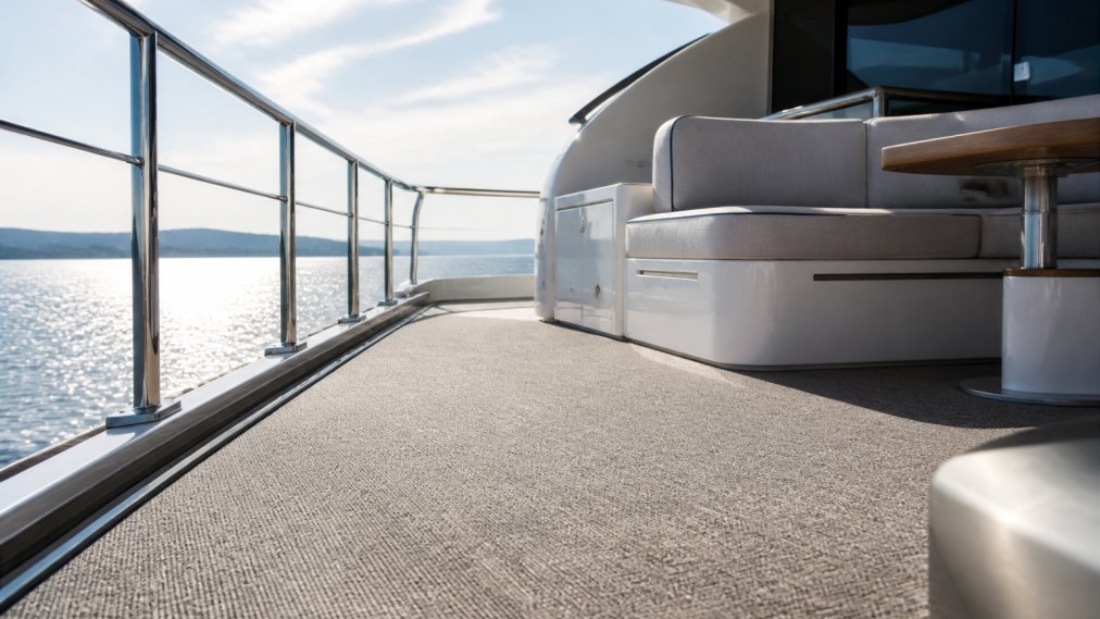
When selecting uv resistant flooring for yacht decks, it’s essential infrastructure for vessels in harsh sunlight. Without proper UV protection, standard materials degrade rapidly, losing color fastness, structural integrity, and non-slip properties within months. The real cost appears in premature replacement cycles, safety hazards, and operational disruption.
Marine environments accelerate degradation through UV radiation, saltwater corrosion, and thermal cycling. A properly engineered UV-resistant flooring system with integrated UV stabilizers extends service life.
North River Limited’s Seagrass and SupremeVinyl collections use UV inhibitors that preserve color fastness and hydrophobic properties that prevent water infiltration at seams and adhesive joints.
Marine Grade Woven Vinyl Flooring: Durability and Performance
Marine-grade woven vinyl flooring combines high-density polymer weaving to resist UV degradation and environmental stressors.
UV stabilizers embedded in the polymer matrix absorb harmful ultraviolet radiation and convert it to heat, slowing color fading and brittleness. Higher-density woven vinyl resists puncture and abrasion.
Non-slip surface properties are engineered through textured weaving patterns and antimicrobial treatments.
How to Clean Marine Vinyl Flooring and Extend Its Life
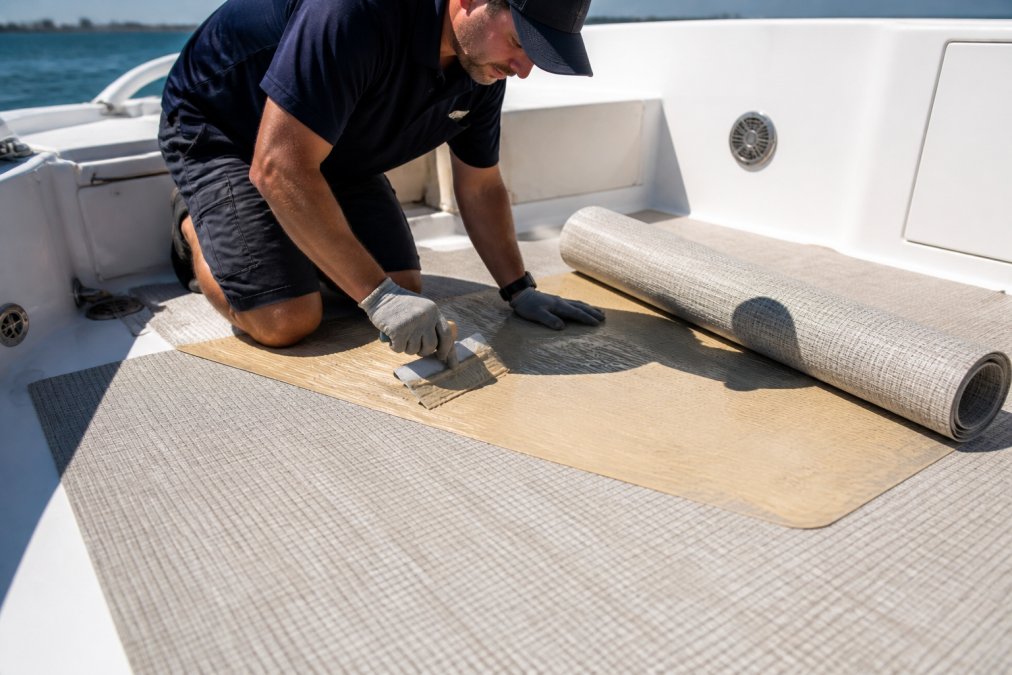
Maintenance directly determines whether uv resistant flooring for yacht decks delivers its promised lifespan. Avoid aggressive cleaning methods that damage the UV-stabilizer layer. Rinse saltwater residue with fresh water within 24 hours to prevent moisture infiltration. Consistent adherence to these cleaning protocols preserves the structural integrity of the deck while helping owners better anticipate the long-term yacht maintenance cost guide.
Use pH-neutral cleaners formulated for marine vinyl; acidic or alkaline solutions strip UV inhibitors. A soft-bristle brush and mild soap removes algae without abrading the surface. Avoid pressure washers, which can force water into seams.
Inspect seams and adhesive joints quarterly for lifting, bubbling, or separation indicating water infiltration. Use marine-grade sealants that resist saltwater degradation. Address small failures to prevent catastrophic deck section failure.
UV-resistant flooring for yacht decks represents a significant operational investment, but the math favors quality over economy. Premature failure creates safety risks, operational downtime, and replacement costs that dwarf the initial material difference. North River Limited’s SupremeVinyl and Seagrass collections deliver proven weathering resistance and color fastness that survives years of tropical sun exposure. Contact our team to discuss specifications, custom color options, and volume pricing for your next build or retrofit.
Frequently Asked Questions
Why is UV resistance critical for marine-grade flooring?
UV rays break down polymer chains in flooring materials, causing fading, cracking, and loss of structural integrity. UV-resistant flooring contains stabilizers that absorb or scatter UV energy, slowing polymer degradation. For yacht decks exposed to intense sun reflection off water, this protection extends decking lifespan, reducing replacement costs and downtime.
How does woven vinyl compare to EVA foam for yacht decks?
Woven vinyl flooring offers UV resistance, stain resistance, and ease of cleaning. Marine grade woven vinyl combines hydrophobic properties, non-slip surfaces, and thermal stability, making it ideal for high-exposure deck applications where durability and low maintenance are priorities.
What maintenance steps prevent UV damage and extend flooring lifespan?
Regular cleaning with mild soap and water removes salt residue and contaminants that accelerate weathering. Inspect seams and adhesive backing quarterly for gaps or lifting, especially in high-heat areas. Avoid harsh chemicals that degrade UV stabilizers. These practices, combined with proper installation, can extend UV-resistant flooring life.