

Last Updated: November 17, 2026
Quick Summary
Marine grade vinyl salt spray testing measures how long flooring resists salt-laden air before visible breakdown: coated samples sit in a sealed chamber misted with salt solution, then inspectors check for blistering, pitting, and coating breakdown. Built for metal, not woven vinyl, it ignores sunlight, foot traffic, cleaning chemicals, and flexing.
- ASTM B117 is the standardized test method that governs salt fog testing in the United States.
- Hours in the chamber are exposure duration, not lifespan, and are only comparable when test conditions match.
- A useful report cites the exact standard, specimen, chamber conditions, exposure duration, inspection method, and failure criteria.
- Specimens should include a seam and an edge, since unsealed edges are where coating breakdown starts.
- Pair salt spray data with UV testing and real installation references from builders running the material.
Table of Contents
- What Marine Grade Vinyl Salt Spray Testing Actually Measures
- The ASTM B117 Salt Spray Test and How the Chamber Runs
- ASTM B117 Salt Spray Test Hours: What the Numbers Do and Do Not Prove
- How to Interpret Salt Spray Test Results for Vinyl Flooring
- Limitations of Salt Spray Testing for Marine Grade Vinyl
- Practical Test Setup for Marine Vinyl Samples
- Salt Spray Versus Real Marine Exposure
- What to Ask a Supplier Before You Trust a Test Claim
- Frequently Asked Questions
What Marine Grade Vinyl Salt Spray Testing Actually Measures
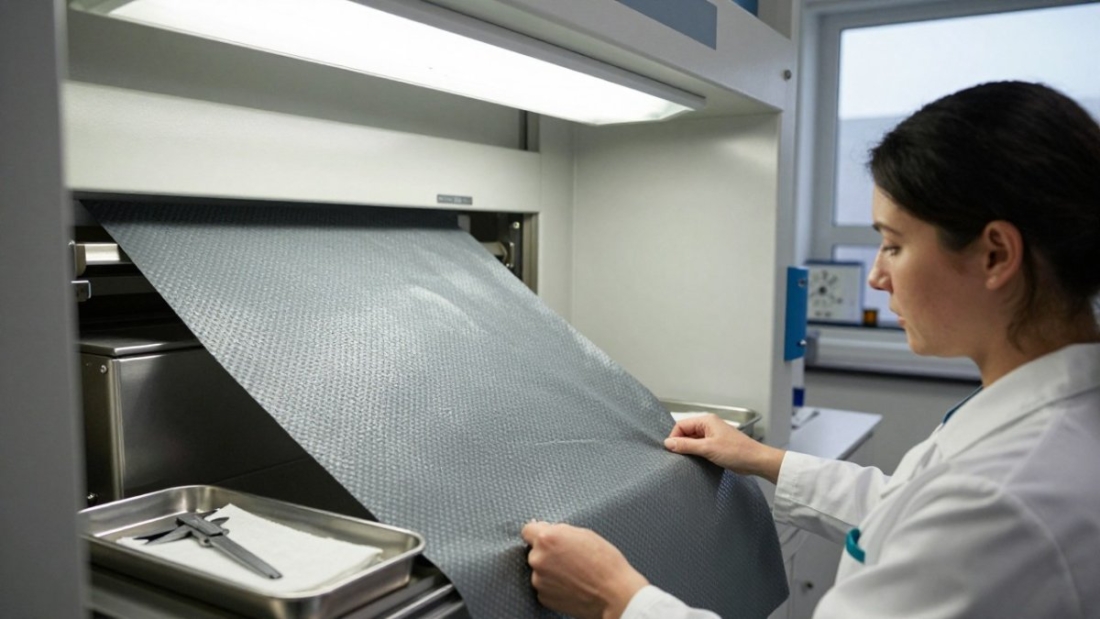
Marine grade vinyl salt spray testing measures how long flooring resists salt-laden air before visible breakdown: coated samples sit in a sealed chamber misted with salt solution, then inspectors check for blistering, pitting, and coating breakdown. Built for metal, not woven vinyl, it ignores sunlight, foot traffic, cleaning chemicals, and flexing, a sample can pass and still fail on a pontoon deck in its second season.
The ASTM B117 Salt Spray Test and How the Chamber Runs
ASTM B117 is the standardized test method that governs salt fog testing in the United States, published by ASTM International’s B117 standard for operating salt spray apparatus.
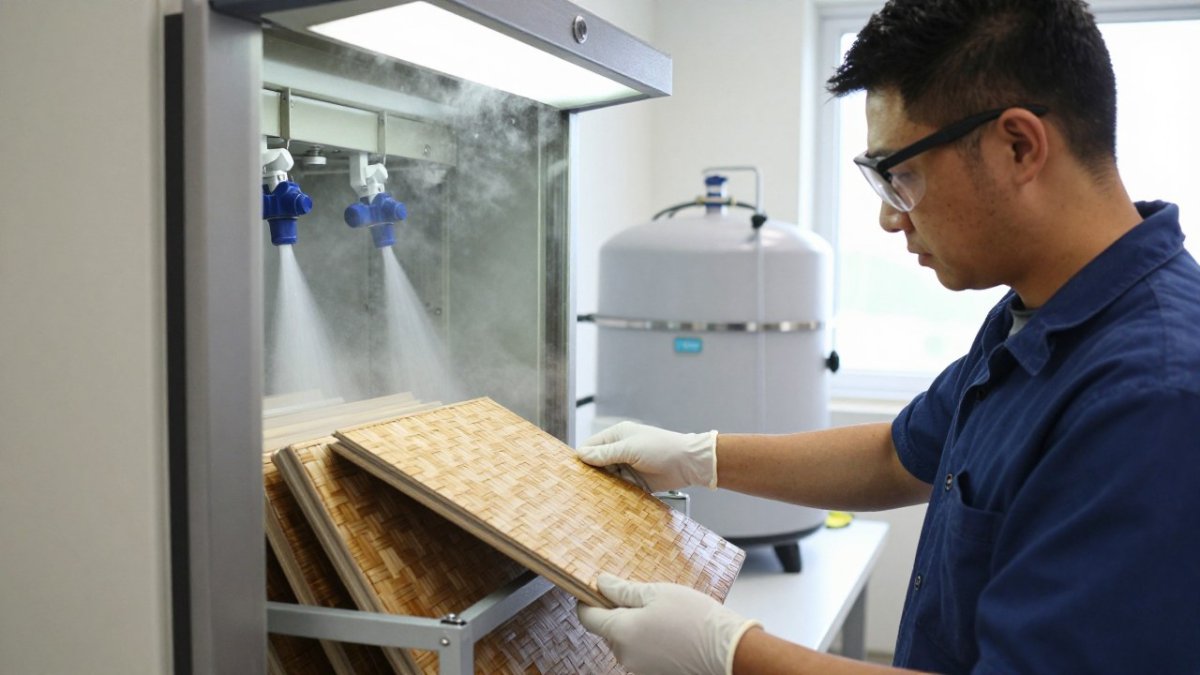
The chamber is a closed cabinet with a reservoir, atomizing nozzles, an air supply, and a heater; small temperature or humidity drifts change how aggressively the salt attacks the surface.
ASTM B117 Salt Spray Test Hours: What the Numbers Do and Do Not Prove
Hours in the chamber are exposure duration, not lifespan: “500 hours” means the sample survived 500 hours of standardized salt mist without hitting agreed failure criteria, not that the floor lasts 500 hours on a boat. Hours are only comparable when solution concentration, temperature, and inspection criteria match, and salt spray says little about adhesive performance, edge lifting, or UV exposure.
How to Interpret Salt Spray Test Results for Vinyl Flooring
Read the report, not the badge. A useful report cites the exact standard and edition, describes the specimen, and states salt concentration, chamber temperature, exposure duration, inspection method, failure criteria, photographs, and who performed the test. For woven vinyl, look for blistering, coating breakdown, haze, color shift, edge delamination, and wear-layer lifting rather than rust.
A useful salt spray report should contain the following details before you rely on it.
| Report element | What to look for |
|---|---|
| Standard | Exact standard and edition cited |
| Specimen | Description of the specimen tested |
| Chamber conditions | Salt concentration and chamber temperature |
| Exposure | Exposure duration in hours |
| Inspection | Inspection method and failure criteria |
| Evidence | Photographs and who performed the test |
| Woven vinyl checks | Blistering, coating breakdown, haze, color shift, edge delamination, wear-layer lifting |
Limitations of Salt Spray Testing for Marine Grade Vinyl
Salt fog testing is accelerated corrosion testing, and acceleration distorts: the chamber holds a constant, aggressive mist, while real coastal exposure is intermittent. For marine grade vinyl it misses UV exposure, adhesive performance under heat cycling, moisture movement through seams, and abrasion. Because UV exposure can degrade marine-grade vinyl even when salt fog results look favorable, assess color and material stability under sunlight alongside corrosion resistance.
Practical Test Setup for Marine Vinyl Samples
Specify specimens that include a seam and an edge, unsealed edges are where coating breakdown starts. Set failure criteria in writing before the lab runs anything, require photographs at each inspection interval, and run the salt spray alongside UV exposure and heat-cycling checks on the adhesive.
Salt Spray Versus Real Marine Exposure
A chamber compresses years of coastal exposure into weeks, but the wrong years: constant salt mist is harsher than most decks ever see, yet it omits the sun that actually degrades vinyl surfaces. Salt spray testing answers “will salt attack this surface?”, not “will this floor last five seasons on a pontoon?” For that you need field references from builders running the material in production, plus a warranty reflecting real service conditions. Ask any supplier for both.
What to Ask a Supplier Before You Trust a Test Claim
Build a short evidence checklist and hold every supplier to it:
- Full test report, not a certificate summary
- Specimen description including seams and edges
- Stated failure criteria and inspection intervals
- Photographs before and after exposure
- Supporting UV and adhesive test data
- References from OEMs running the material for several years
- Clear statement of what the test does and does not cover
The gap between a chamber result and a deck that survives a decade is where material selection actually happens. North River Limited has over 15 years of experience in woven vinyl flooring for the marine and RV industries, with collections including Seagrass and SupremeVinyl. Contact Us to learn more about current pricing and product options, which depend on quantity, dates, and delivery.
Frequently Asked Questions
Does ASTM B117 test marine-grade vinyl itself or its metal components?
ASTM B117 was written for metals and coated metal specimens, so it directly measures corrosion on things like fasteners, trim, and subfloor hardware. When a flooring supplier cites it, the test usually covers the full assembly: vinyl surface, backing, adhesive, and the metal parts it contacts. Ask which specimens went into the chamber. A report that only tested metal trim tells you nothing about whether the vinyl will blister, lift, or chalk in a coastal installation.
How many hours should marine vinyl withstand in a salt spray test?
There is no universal pass mark. Hours are chosen to match the intended service environment, and a coastal boat or RV application typically calls for longer exposure than an inland one. The number only means something when paired with a stated failure criteria, such as no blistering or no coating breakdown at a defined rating. Treat a bare hour figure with no acceptance criteria as a marketing line, not evidence.
What should a salt spray test report include?
A usable report names the standard followed, the exposure duration, chamber temperature and salt solution concentration, specimen description and preparation, and the inspection method used to grade corrosion. It should also include photographs of the samples before and after, plus the pass or fail criteria agreed in advance. Without those details you cannot tell whether the result applies to your production material or to a lab sample that never saw a boat deck.
