

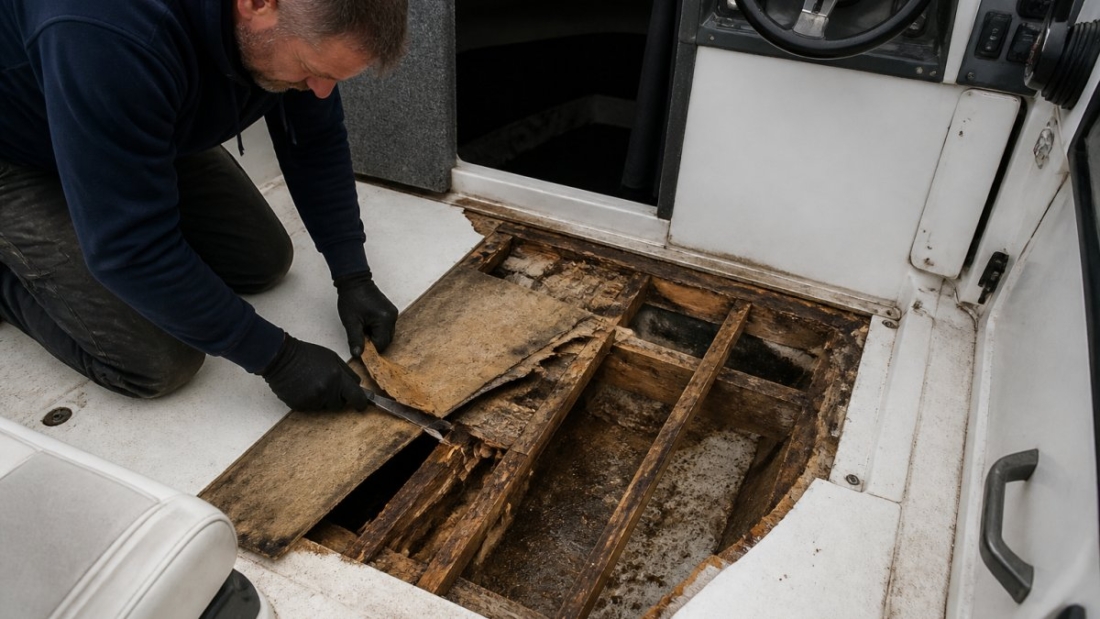
Last Updated: October 24, 2026
Quick Summary
How to stop subfloor rot in boats starts by finding and stopping water intrusion at its source, through deck seams, windows, hatches, and failed caulking, then replacing damaged wood with epoxy-sealed plywood and applying waterproof coatings like polyurethane or fiberglass-reinforced epoxy.
- Soft spots under foot pressure, dark wood staining, and musty odors indicate subfloor rot has begun.
- Water enters through deck seams, windows, hatches, failed caulking, and plumbing penetrations.
- Apply penetrating epoxy sealer in two coats to all wood surfaces before installation.
- Fiberglass cloth bonded with epoxy is the most durable waterproofing option available.
- Extra coatings at seams and panel transitions provide critical protection against future rot.
Table of Contents
- Identifying Signs of a Rotten Boat Floor
- Finding and Stopping Water Intrusion
- How to Waterproof Plywood for a Boat
- Frequently Asked Questions
Identifying Signs of a Rotten Boat Floor
Understanding how to stop subfloor rot in boats starts with recognizing warning signs: soft spots under foot pressure, dark wood staining, and a musty odor below deck. Press firmly with your heel, a spongy feel means rot has likely begun, and water stains spread from seams, hatches, or drains.
Finding and Stopping Water Intrusion
Water intrusion is the root cause of subfloor rot in boats. Find the leak source before replacing flooring: water enters through deck seams, windows and hatches, failed caulking, or plumbing penetrations.
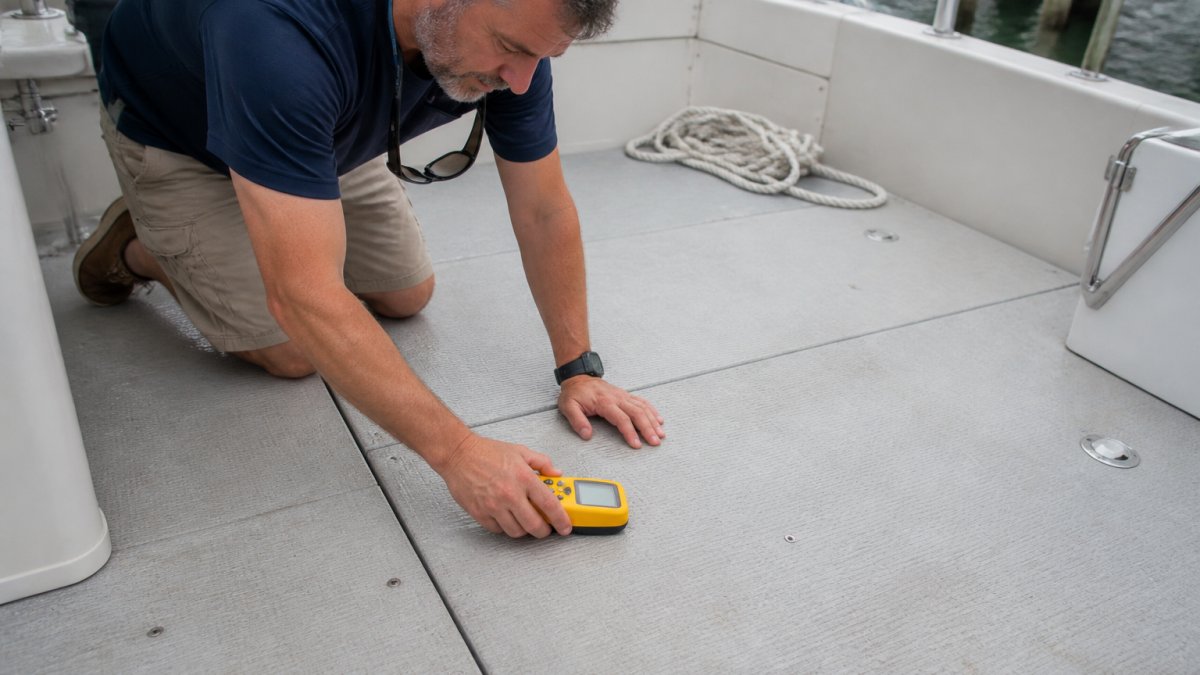
Check every deck seam for cracked caulk, plus through-hull fittings and deck-mounted hardware. Learning how to stop subfloor rot in boats means stopping the leak first: recaulk failed seams with marine-grade sealant, replace deteriorated gaskets, and seal gaps around fittings.
How to Waterproof Plywood for a Boat
Waterproofing plywood protects your replacement subfloor from future rot. Apply a penetrating epoxy sealer to all wood surfaces before installation, two coats beat one, then add a topside waterproof coating such as polyurethane or polyester resin.
Fiberglass cloth bonded with epoxy is the most durable option: lay mat over sealed wood, wet it out with epoxy, and cure fully. Sealing seams and edges matters most, apply extra coatings at all joints and panel transitions.
Our SupremeVinyl and Seagrass collections provide waterproof surfaces engineered for marine environments, delivering durability without the ongoing maintenance wood requires.
Boat subfloor rot develops when water reaches wood and moisture stays trapped. Stop intrusion at the source, dry affected areas completely, and seal replacement materials thoroughly. For manufacturers seeking reliable, maintenance-free solutions, marine flooring standards and best practices guide material selection. Contact North River Limited to explore flooring options that eliminate rot risk and simplify installation for your production line.
Several waterproofing methods protect replacement subfloor from future rot.
| Method | Application | Key Benefit |
|---|---|---|
| Penetrating epoxy sealer | Two coats on all wood surfaces | Foundational protection before installation |
| Polyurethane or polyester resin | Topside waterproof coating | Additional surface protection layer |
| Fiberglass cloth with epoxy | Lay mat, wet out, cure fully | Most durable option available |
| Extra coatings at joints | Apply at seams and panel transitions | Sealing edges matters most |
Frequently Asked Questions
How can I fix a rotten subfloor in a boat?
Fixing boat subfloor rot involves three steps: stop the water source, remove damaged wood and rotten material, and seal the replacement plywood with epoxy or fiberglass. For spot repairs, cut out the affected area, dry the substrate completely, and bond new marine-grade plywood with penetrating epoxy. For extensive rot, the entire subfloor section may need replacement. Always verify the structural integrity of stringers and hull before proceeding.
What causes a boat subfloor to rot?
Boat subfloor rot results from prolonged moisture exposure through leaks, poor ventilation, or failed waterproofing seals. Water intrusion through deck seams, hull breaches, or failed fiberglass encapsulation allows moisture to penetrate the wood core. Without proper drying and waterproof barriers, wood rot spreads quickly in marine environments. Regular inspection and immediate repair of water sources prevent rot from developing.
How do you prevent subfloor rot in a boat?
Prevent subfloor rot by maintaining a maintenance schedule that includes regular inspections for soft spots and moisture, promptly sealing any leaks or cracks, ensuring proper ventilation to keep the deck dry, and using waterproof flooring materials with encapsulated cores. Woven vinyl flooring with antimicrobial properties and UV resistance eliminates the need for ongoing wood sealant reapplication.
