

Table of Contents
- What Makes Woven Vinyl Flooring the Best Choice for Pontoons
- How to Install Woven Vinyl on Pontoon Deck
- Woven Vinyl vs Marine Carpet Pros and Cons
- Cleaning and Maintenance Tips for Marine Vinyl
- Best Marine Flooring for High Traffic Areas
- Longevity and Climate: How Woven Vinyl Holds Up
- Frequently Asked Questions
Last Updated: September 16, 2026
What Makes Woven Vinyl Flooring the Best Choice for Pontoons
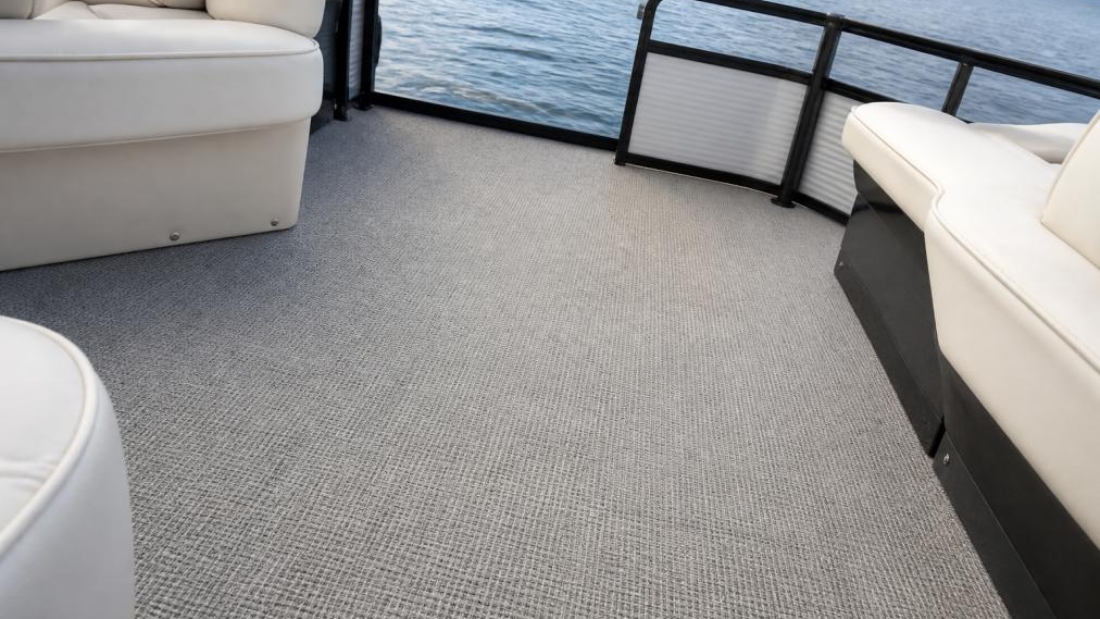
Woven vinyl flooring is a synthetic marine decking made from PVC strands woven into a textured sheet bonded to a waterproof backing. For pontoons, it delivers slip resistance, UV stability, and easy cleaning that marine carpet cannot match.
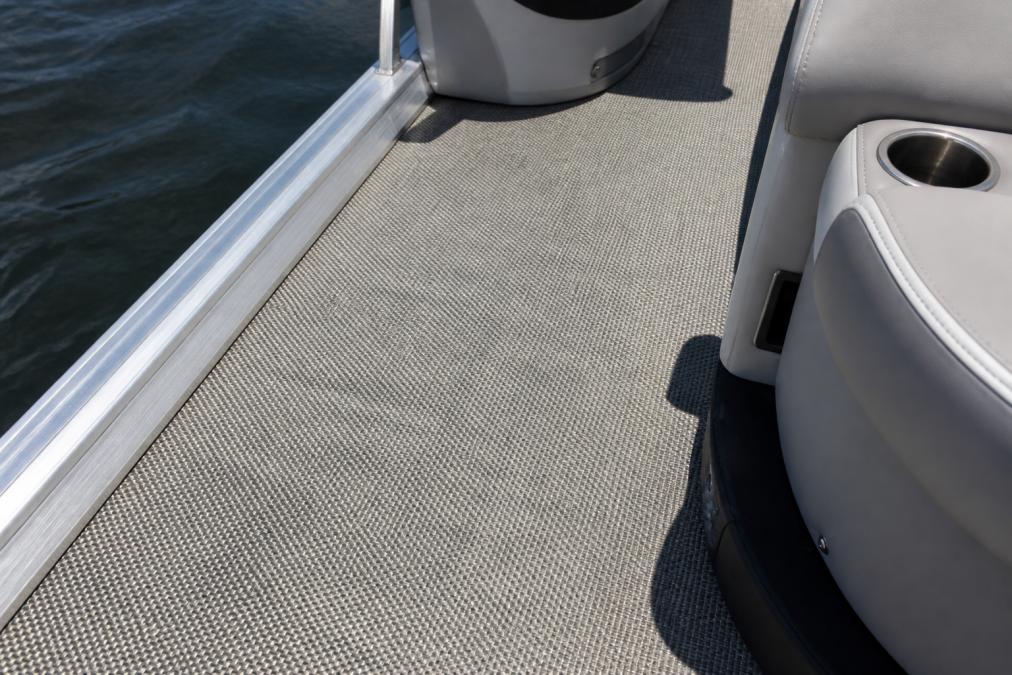
The best woven vinyl flooring for pontoons sheds water instead of trapping moisture like carpet. Key factors include backing quality, UV stabilization, and slip resistance. North River Limited has supplied woven vinyl to marine and RV manufacturers for over 15 years; prioritizing backing quality and UV treatment adds years of service life.
How to Install Woven Vinyl on Pontoon Deck
Installing woven vinyl on a pontoon deck requires a clean, flat subfloor, compatible marine adhesive, and careful seam management.
Total Time: 1-2 days
Difficulty: Intermediate
What You’ll Need: Woven vinyl sheet, marine-grade deck adhesive, notched trowel, weighted roller, seam roller and sealer, utility knife and straightedge, and acetone or approved cleaner.
Step 1: Prepare the Subfloor
Remove old flooring, adhesive residue, and fasteners; sand rough spots and fill voids. The surface must be dry, clean, and flat, trapped moisture causes adhesive failure.
Step 2: Acclimate and Dry-Fit the Material
Lay the vinyl flat to relax, then dry-fit, mark cut lines, and leave a trim allowance at edges.
Step 3: Apply Marine Adhesive
Spread adhesive with a notched trowel at the manufacturer’s coverage rate, working in sections before it skins over.
Step 4: Lay and Roll the Vinyl
Set the vinyl into the wet adhesive from the center outward, then roll the surface with a weighted roller.
Step 5: Seal Seams and Trim Edges
Seal seams with seam sealer or heat welding per spec, then trim edges flush and secure under trim or rub rail.
Adhesive compatibility is the most common installation failure point. Not every marine adhesive bonds properly to TPO backing. Confirm the adhesive manufacturer lists TPO as a compatible substrate before you buy, or the bond can release in heat cycles.
Woven Vinyl vs Marine Carpet Pros and Cons
Woven vinyl outperforms marine carpet on moisture, durability, and cleaning, but carpet wins on initial cost and barefoot softness.
| Factor | Woven Vinyl | Marine Carpet |
|---|---|---|
| Moisture resistance | Waterproof, sheds water | Absorbs and holds water |
| Mold and mildew | Resists growth | Prone without frequent drying |
| Cleaning | Wipe or hose down | Requires shampooing and drying |
| Slip resistance when wet | High with textured weave | Lower when saturated |
| Fade resistance | UV stabilized | Fades faster in direct sun |
| Underfoot comfort | Firm with cushioned backing options | Softest feel |
| Lifespan | Longer service life | Shorter, needs replacement sooner |
| Initial cost | Higher upfront | Lower upfront |
Cleaning and Maintenance Tips for Marine Vinyl
Cleaning marine vinyl takes minutes, not hours. Routine rinsing prevents most staining, and mild soap handles the rest.
- Rinse with fresh water after every outing, especially after salt or lake water.
- Use a soft-bristle brush with mild dish soap; avoid abrasive cleaners, acetone, and bleach.
- Inspect seams and edges twice a season for lifting or gaps.
Skipping seam inspection is how small gaps become subfloor water damage. A lifted seam lets water travel under the sheet, where it reaches the plywood or foam core and causes rot that costs far more to repair than the seam ever would have.
Best Marine Flooring for High Traffic Areas
High-traffic marine areas need flooring that resists abrasion, holds grip when wet, and cleans easily. Woven vinyl with a thick wear layer and cushioned backing meets all three.
Does woven vinyl add too much weight to a pontoon?
Weight impact is smaller than most buyers expect. Woven vinyl sheet can be lighter than wet marine carpet, which may contribute to pontoon performance and fuel economy.
Can woven vinyl be repaired if damaged?
Yes. Small cuts and burns can often be patched, and larger sections may be replaced with matching material.
The two decisions that determine how long pontoon decking lasts are backing quality and adhesive compatibility. Get those right and the pattern, color, and texture become purely aesthetic choices.
U.S. Coast Guard boating safety and vessel standards
Longevity and Climate: How Woven Vinyl Holds Up
Climate decides how hard your flooring works. UV-stabilized woven vinyl resists fading and cracking in intense sun, while mold-resistant construction handles humid and wet climates; in freeze-thaw regions, a moisture barrier keeps water away from the subfloor. In restoration projects, a properly specified woven vinyl sheet often outlasts the original flooring by years, but installation quality and subfloor prep determine real service life.
Frequently Asked Questions
Is woven vinyl flooring better than marine carpet for pontoons?
Woven vinyl flooring outperforms marine carpet in durability, moisture resistance, and ease of cleaning. Carpet traps water, dirt, and mildew, while woven vinyl is waterproof and mold resistant. For pontoon owners dealing with frequent splashes and sun exposure, woven vinyl is the more practical long-term choice.
How do you clean woven vinyl flooring on a boat?
Routine cleaning requires only mild soap and water with a soft-bristle brush. For stubborn stains, use a diluted household cleaner and rinse thoroughly. Avoid abrasive pads or harsh solvents that can damage the UV-stabilized surface. Regular cleaning prevents dirt buildup and keeps the marine vinyl looking new.
What is the best thickness for pontoon vinyl flooring?
Thickness typically ranges from 50 to 100 mil. Thicker options (80-100 mil) offer better underfoot comfort and durability for high-traffic areas. For standard pontoon use, 60-80 mil balances weight, cost, and longevity. Always check that the thickness suits your subfloor and installation method.
Pontoon decking fails for predictable reasons: trapped moisture, weak adhesive bonds, and thin wear layers. North River Limited addresses all three with over 15 years of marine and RV flooring experience, waterproof TPO-backed construction, and UV-stabilized woven vinyl available directly to manufacturers at more affordable pricing. Get started with North River Limited and specify flooring built to survive real deck conditions.