
Last Updated: October 25, 2026
Quick Summary
Woven vinyl marine flooring is the industry standard for durable flooring high traffic marine environments because its closed-cell construction resists moisture, maintains traction when wet, and withstands years of heavy foot traffic without UV damage or premature fading.
- Woven vinyl needs only fresh-water rinsing and mild detergent cleaning, with no sealants or premature replacement cycles required.
- Solid vinyl, marine carpet, and traditional PVC typically last 2-3 years in marine conditions, while woven vinyl offers years of durability.
- Woven vinyl won’t absorb moisture through seams, preventing a common failure point that affects marine carpet and traditional PVC.
- Extended lifespan reduces downtime, labor costs, and disposal expenses compared to flooring replaced every 3-4 years.
Table of Contents
- Why Durable Flooring for High Traffic Marine Environments Matters
- Woven Vinyl Marine Flooring: The Standard for Commercial Boat Flooring
- Marine Flooring Maintenance and Lifecycle Cost Considerations
- Frequently Asked Questions
Why Durable Flooring for High Traffic Marine Environments Matters
Durable flooring high traffic marine environments is essential infrastructure. Vessels endure constant foot traffic, saltwater, UV radiation, and temperature swings that destroy ordinary materials within months, so the right choice protects resale value, crew safety, and efficiency.
At North River Limited, we’ve spent over 15 years helping marine manufacturers solve this problem. Water resistance, slip resistance, and durability under heavy foot traffic are baseline requirements.
Woven Vinyl Marine Flooring: The Standard for Commercial Boat Flooring
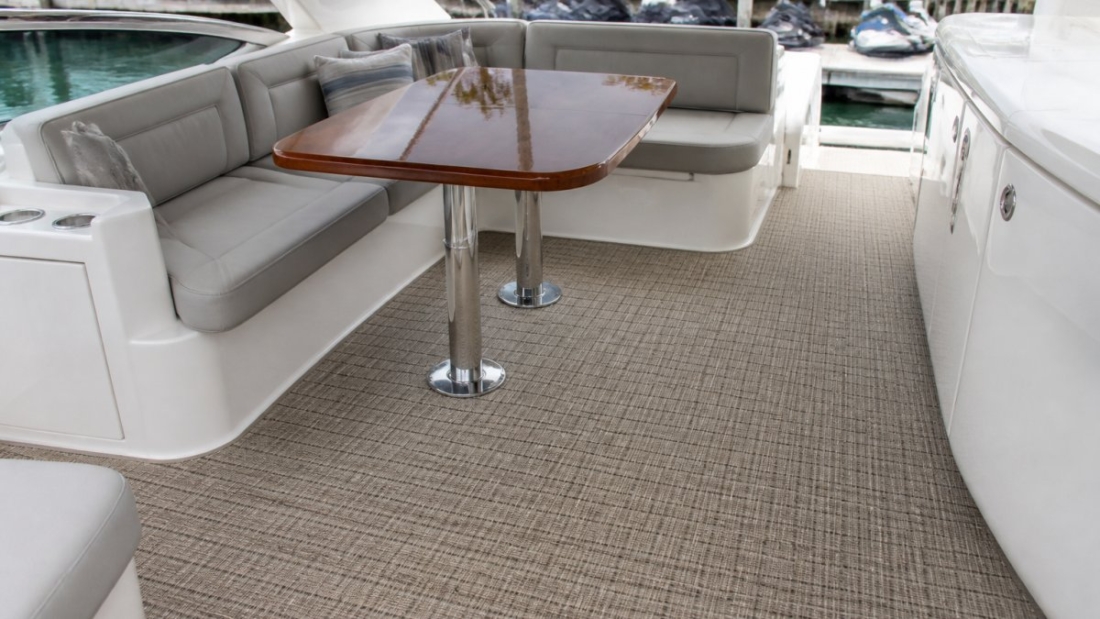
Woven vinyl marine flooring is the industry standard for commercial boat flooring: closed-cell construction resists moisture, holds traction when wet, and withstands years of heavy foot traffic.
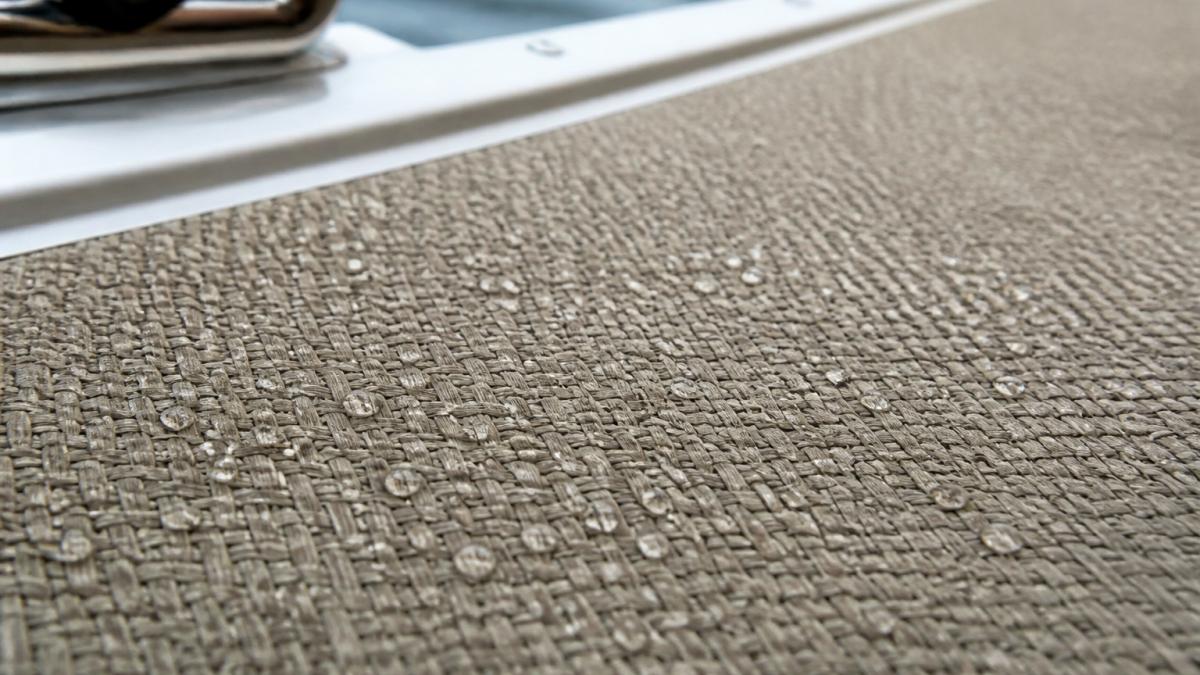
Woven vinyl pairs polyvinyl durability with textile reinforcement. Unlike solid vinyl or marine carpet, it resists UV damage, won’t absorb moisture through seams, and keeps its color and texture after years of saltwater and sun exposure.
The key advantage is lifecycle cost. Woven vinyl needs only routine fresh-water cleaning and occasional deck treatment, with no sealants or premature replacement cycles. For pontoon flooring, yacht interiors, and commercial fishing decks, that means lower total cost of ownership than alternatives that crack or fade within 2-3 years.
Woven vinyl outperforms common marine flooring alternatives in the key areas that matter most.
| Flooring Type | UV Resistance | Moisture Absorption | Typical Lifespan |
|---|---|---|---|
| Woven vinyl | Resists UV damage | Won’t absorb through seams | Years of durability |
| Solid vinyl | Susceptible to damage | Variable | 2-3 years |
| Marine carpet | Susceptible to damage | Absorbs moisture | 2-3 years |
| Traditional PVC | Susceptible to damage | Seeps into substrate | 2-3 years |
Marine Flooring Maintenance and Lifecycle Cost Considerations
Woven vinyl’s construction stops water seeping into the substrate, a common failure point with marine carpet or traditional PVC.
Routine maintenance is simple: rinse with fresh water after saltwater exposure, use mild detergent for stubborn stains, and air dry.
Flooring replaced every 3-4 years creates downtime, labor, and disposal costs; durable flooring high traffic marine applications like woven vinyl’s abrasion and impact resistance offers extended functionality. For manufacturers producing 40+ units monthly, that’s significant operational savings. Consistent performance across diverse commercial sectors often hinges on evaluating various durable flooring options to ensure long-term structural integrity.
Frequently Asked Questions
What type of marine flooring is best for high-traffic boat decks?
Woven vinyl marine flooring is the industry standard for high-traffic commercial and recreational vessels. It combines closed-cell construction for water resistance, UV-stabilized polyvinyl compounds for sun exposure, and textured surfaces for slip resistance. Unlike EVA foam or traditional marine carpet, woven vinyl handles heavy foot traffic without compression, maintains traction when wet, and resists cracking and peeling in harsh marine environments.
How does woven vinyl marine flooring compare with foam decking for durability?
Woven vinyl offers superior durability in high-traffic areas. EVA foam compresses under repeated heavy foot traffic, loses traction when saturated, and degrades faster under UV exposure. Woven vinyl maintains its structural integrity, resists puncture and impact damage, and provides consistent slip resistance across its lifecycle. For commercial boat flooring where vessels operate continuously, woven vinyl typically outlasts foam by 5+ years with proper maintenance.
What is the total cost of ownership for marine flooring over its lifespan?
Marine flooring cost depends on material type, installation complexity, vessel size, and usage intensity. Woven vinyl requires lower maintenance compared to alternatives that need resealing or replacement. When calculating lifecycle cost, factor in material price, installation labor, adhesive and sealing requirements, replacement frequency, and downtime during installation. Contact North River Limited for a detailed quote based on your vessel specifications and production volume.
For marine manufacturers seeking flooring that performs reliably across pontoons, commercial boats, and RV interiors, woven vinyl remains the most practical choice. North River Limited’s expanded collection, including Seagrass and SupremeVinyl, delivers the durability, affordability, and aesthetic appeal your production line demands. Contact us to discuss specifications, bulk pricing, and installation support tailored to your manufacturing workflow.
