
Table of Contents
- Why Durable Interior Flooring Matters in RV Manufacturing
- RV Flooring Options: Material Types and Performance
- RV Vinyl Plank Flooring: Durability, Weight, and Installation
- Frequently Asked Questions
Last Updated: October 15, 2026
Why Durable Interior Flooring Matters in RV Manufacturing
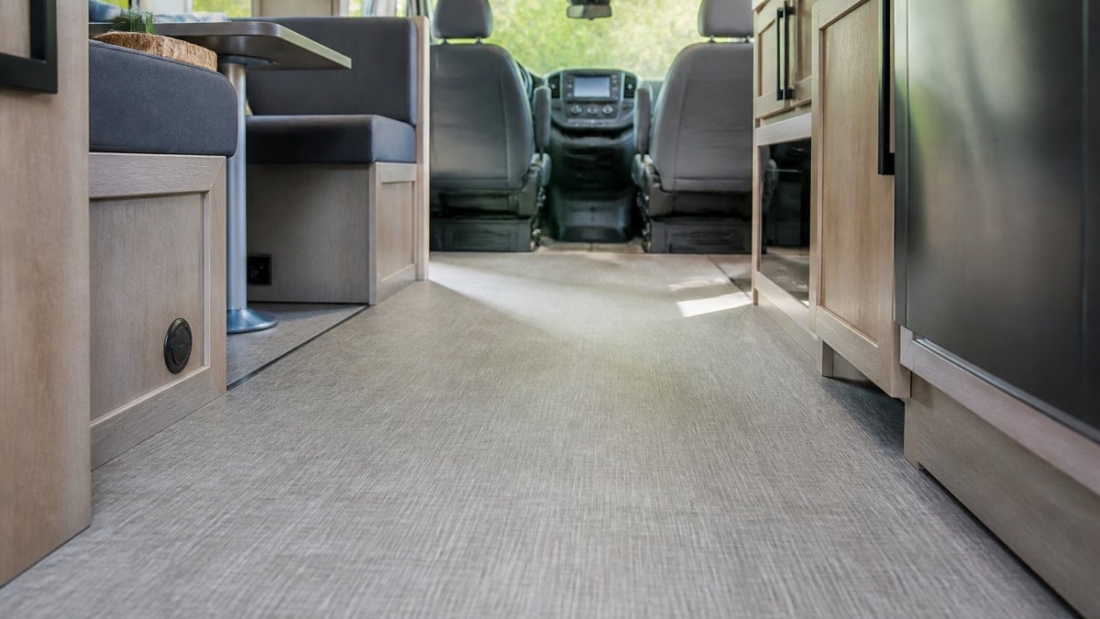
Durable interior flooring RVs rely on directly impacts long-term value and customer satisfaction. RV flooring endures foot traffic, temperature swings, moisture, and towing vibrations; low-quality materials risk warranty claims and brand damage. Choosing durable interior flooring for recreational vehicles means engineering a product that performs for years. Maintaining this level of resilience requires consistent attention to every detail, including the selection of robust RV interior hardware that ensures cabinets remain secure despite the constant motion of the road.
At North River Limited, 15 years of specialized expertise in the marine and RV industries highlights the importance of material selection, weight-to-durability ratio, and installation method for long-term performance.
RV Flooring Options: Material Types and Performance
Luxury vinyl plank (LVP) dominates by balancing durability, weight, and cost. Laminate is lighter but absorbs moisture and fails in humid climates. Ceramic tile looks premium but adds weight that cuts towing capacity. Woven vinyl flooring delivers marine-grade durability without tile’s weight penalty or laminate’s moisture vulnerability.
Water-resistant surfaces repel moisture temporarily but allow penetration if seams fail; waterproof flooring prevents water from reaching the subfloor entirely. For RVs, where subfloor moisture creates soft spots and structural decay, true waterproof solutions are non-negotiable.
Every pound of flooring reduces RV payload capacity. A heavy ceramic tile installation can consume 500-800 pounds on a mid-size RV, while vinyl plank and woven vinyl keep weight minimal without sacrificing durability.
| Flooring Type | Weight Per Sq Ft | Waterproof | Durability | Best For |
|---|---|---|---|---|
| Luxury Vinyl Plank | 1.5-2 lbs | Yes | High | Most RV applications |
| Laminate | 1.2-1.8 lbs | No | Medium | Budget-conscious builds |
| Ceramic Tile | 3-4 lbs | Yes | Very High | Stationary RVs only |
| Woven Vinyl | 1.8-2.2 lbs | Yes | Very High | Professional-grade builds |
RV Vinyl Plank Flooring: Durability, Weight, and Installation
Luxury vinyl plank flooring is the industry standard: the wear layer resists scratches and stains, the core layer provides stability and sound dampening, and the backing layer blocks water from the subfloor.
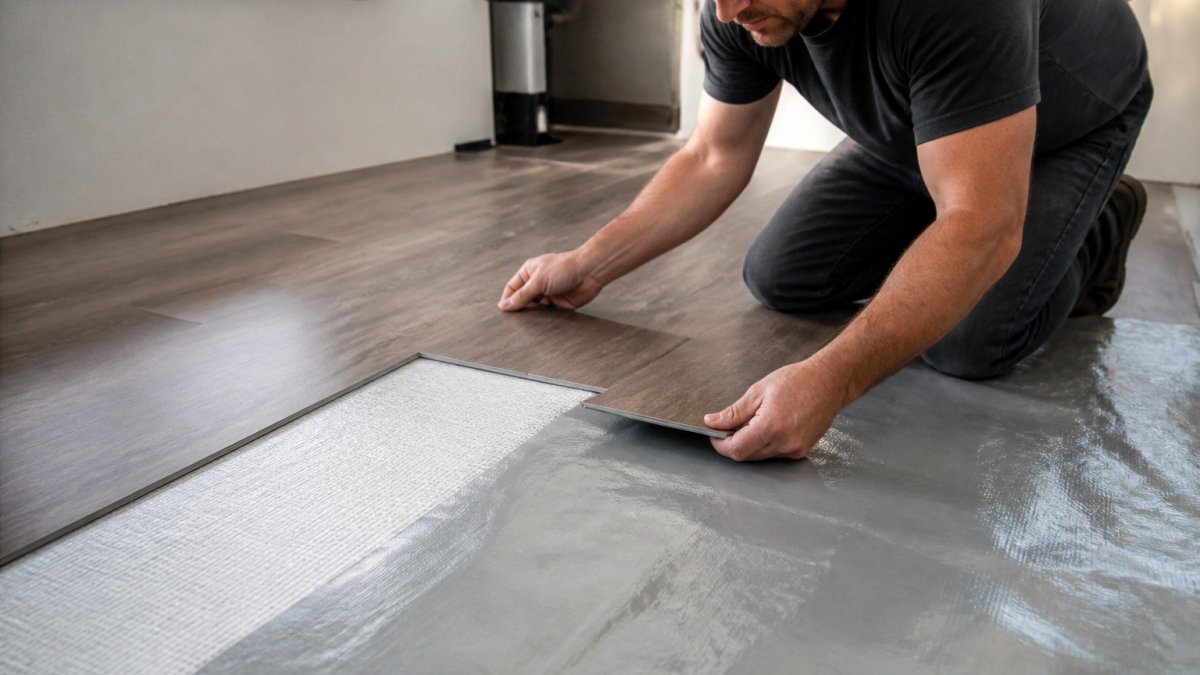
Installation method determines long-term performance. Peel-and-stick vinyl uses adhesive directly on the substrate, while floating tongue-and-groove systems sit over underlayment, allowing expansion without adhesive failure. In RVs with significant thermal expansion, floating systems outperform adhesive-based installations, avoiding the bubbling and lifting customers complain about.
Our SupremeVinyl line is engineered to meet the rigorous demands of marine and RV environments, including thermal cycling, to provide reliable performance.
Ready to upgrade your RV flooring specifications? North River Limited delivers durable interior flooring RVs need, engineered to withstand thermal expansion, moisture, and high-traffic wear. Our SupremeVinyl and Seagrass collections offer marine-grade waterproofing, lightweight construction that preserves towing capacity, and production-proven installation. Contact us for custom quotes and technical specifications.
Frequently Asked Questions
What makes woven vinyl flooring better than luxury vinyl plank for RV applications?
Woven vinyl flooring is engineered to meet the rigorous demands of marine and RV environments, offering durability in high-traffic RV interiors. Its construction is designed to resist punctures and wear. Additionally, woven vinyl provides moisture resistance and maintains structural integrity during thermal expansion cycles common in RVs exposed to temperature fluctuations. The slip-resistant properties and UV stabilization make woven vinyl ideal for marine and RV environments where durability and safety are critical.
How does low-VOC vinyl flooring impact RV interior air quality?
Low-VOC (volatile organic compound) vinyl flooring reduces off-gassing in enclosed RV cabins, which is important for occupant health during extended use. Standard vinyl products can emit harmful chemicals over time, especially in high-heat conditions. Low-VOC formulations minimize these emissions without compromising durability or performance. For manufacturers, specifying low-VOC materials helps meet indoor air quality standards and appeals to health-conscious buyers. The material still provides waterproof protection, slip resistance, and thermal stability required in RV environments.
What installation method minimizes adhesive failure in high-heat RV conditions?
Floating installation with tongue-and-groove planks reduces adhesive failure risk compared to peel-and-stick methods in high-heat environments like Arizona climates. Floating floors accommodate thermal expansion without stress on adhesive bonds. When adhesive is necessary, marine-grade formulations rated for temperature swings perform better than standard vinyl adhesives. Proper subfloor preparation with a moisture barrier is essential, any moisture or soft spots underneath will cause lifting regardless of adhesive type. For manufacturers prioritizing reliability, floating systems with quality underlayment provide the most stable long-term performance in demanding climates.