

Table of Contents
- Why Boat Flooring Adhesive Fails and How to Stop It
- Best Surface Preparation for Boat Deck Flooring
- Marine Flooring Edge Sealing Techniques and Curing Time for Marine Deck Adhesives
- Frequently Asked Questions
Last Updated: September 19, 2026
Why Boat Flooring Adhesive Fails and How to Stop It
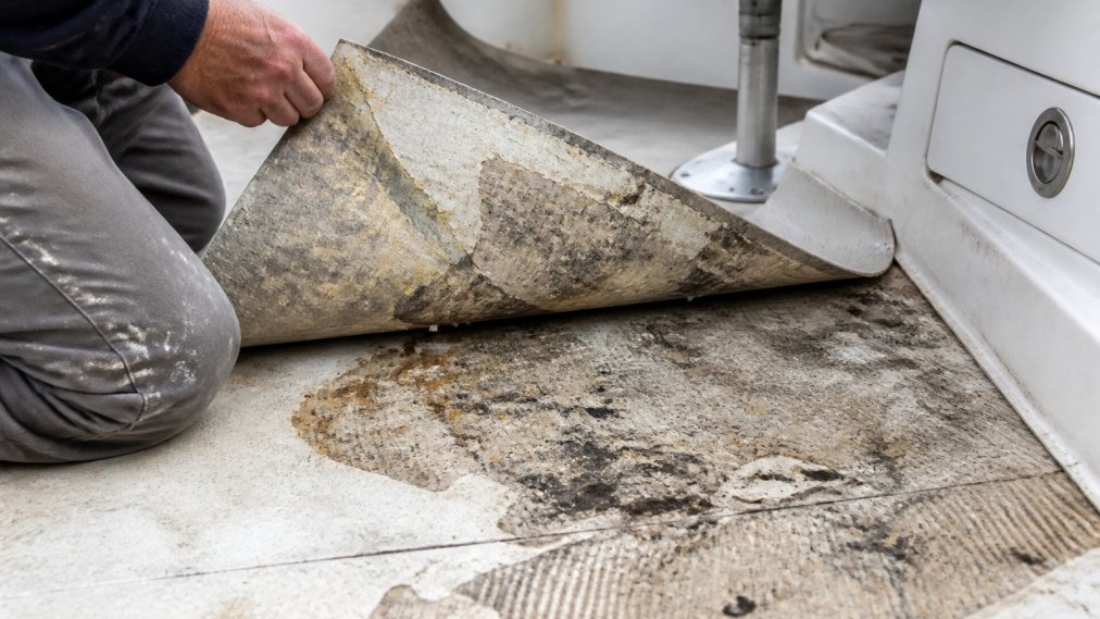
Boat flooring adhesive failure happens when the bond between your vinyl flooring and the substrate breaks down. Water seeps in. Edges lift. The entire floor becomes unsafe.
Most failures stem from poor surface preparation: skipped degreasing, incomplete drying, or contamination.
North River Limited has identified the exact steps to prevent boat flooring adhesive failure before it starts.
Best Surface Preparation for Boat Deck Flooring
Remove all old adhesive, sealants, and contaminants down to bare substrate, as dust and particles block the bond.
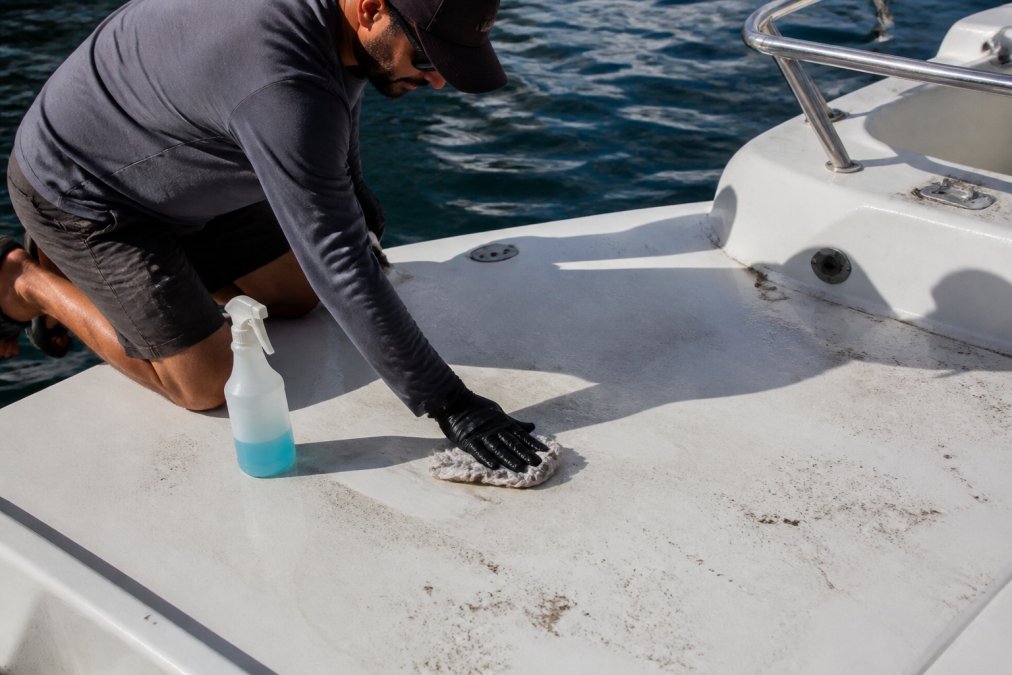
Wipe with isopropyl alcohol, apply marine-grade degreaser, scrub with a stiff brush, then allow 24 hours for drying.
A single layer of dust or oil reduces bond strength by up to 50%.
Apply adhesive between 60°F and 85°F with humidity below 85% to ensure proper curing and penetration.
Dry-fit your flooring before applying adhesive. This reveals gaps, misalignments, or substrate issues you can fix before the adhesive sets. Many installers skip this step. Don’t.
Marine Flooring Edge Sealing Techniques and Curing Time for Marine Deck Adhesives
After adhesive sets, apply flexible marine-grade sealant around all edges and seams to flex with temperature changes.
Apply sealant in a continuous bead with painter’s tape, removing before full cure.
Curing time for marine deck adhesives varies by product: most sets in 24 hours, but full cure takes 48 to 72 hours; avoid foot traffic and water exposure.
Temperature affects curing speed; warmer conditions cure faster.
Rushing the cure time is a common mistake. The adhesive may feel set after 24 hours, but it’s not fully cured. Walking on it or exposing it to water before full cure weakens the bond permanently. Wait the full 72 hours.
Maintain proper ventilation after installation to prevent mold growth (the CDC).
Proper boat flooring adhesive failure prevention comes down to three non-negotiable steps: clean and degrease your substrate, apply adhesive at the right temperature, and allow full curing time. North River Limited’s SupremeVinyl and Seagrass collections are engineered to bond securely when these steps are followed. Contact us for installation guidance and product specifications tailored to your manufacturing needs.
| Step | Duration | Critical Detail |
|---|---|---|
| Surface cleaning and degreasing | 2-4 hours | Must reach bare substrate |
| Drying time | 24 hours minimum | Temperature and humidity dependent |
| Adhesive application | 30-60 minutes | Apply within open time window |
| Initial set | 24 hours | Avoid foot traffic |
| Full cure | 48-72 hours | Maximum bond strength achieved |
Frequently Asked Questions
What are the common causes of boat flooring adhesive failure?
Adhesive failure typically stems from inadequate surface preparation, moisture trapped beneath the flooring, temperature extremes during application, and poor edge sealing. When substrates aren’t properly degreased or remain damp, the chemical bond weakens. Marine environments expose adhesive to constant thermal cycling and moisture ingress, which accelerates peeling and lifting if the bond isn’t established correctly from the start.
How long should marine deck adhesives cure before foot traffic?
Most marine-grade adhesives require 24 to 48 hours of full curing time before the boat flooring can support normal foot traffic. However, curing time depends on application temperature and humidity levels. Cooler temperatures and high humidity extend curing significantly. Always follow the adhesive manufacturer’s specifications for your specific product and environmental conditions to ensure maximum bond strength.
Does moisture cause boat flooring to peel and lift?
Yes, moisture is one of the primary drivers of boat flooring peeling. Water trapped between the substrate and vinyl prevents proper adhesive curing and weakens the mechanical bond. Moisture ingress through unsealed edges or gaps allows water to seep into the substrate, causing foam compression and adhesive failure. Proper edge sealing and substrate drying before installation are critical to preventing this damage.